The outputs of implementing Engineering Automation

These are 10 aftereffects of implementing Engineering Automation:

    • One product model for all commercial requirements.
    • Easy to configure for non-technical people.
    • Configurable down to the detailed technical requirements.
    • Able of being extended to a sales configurator.
    • Capable of outputting sales Documents automatically.
    • Proposal documents, sales order documents data sheets and more.
    • Automated generation of 3D CAD models.
    • Automated generation of 2D Drawings.
    • Automated product sizing and engineering designs.
    • Automated generation of Technical Documents.
      BOM (Bill Of Materials), BOQ (Bill Of Quantity), Step-Files, flat patterns, manuals cost calculations, etc

Now, that you know the return you can have with the implementation. Let’s see one of our products, the 3D models, 2D drawings and Technical Specifications.


Watch the configuration DEMO here.

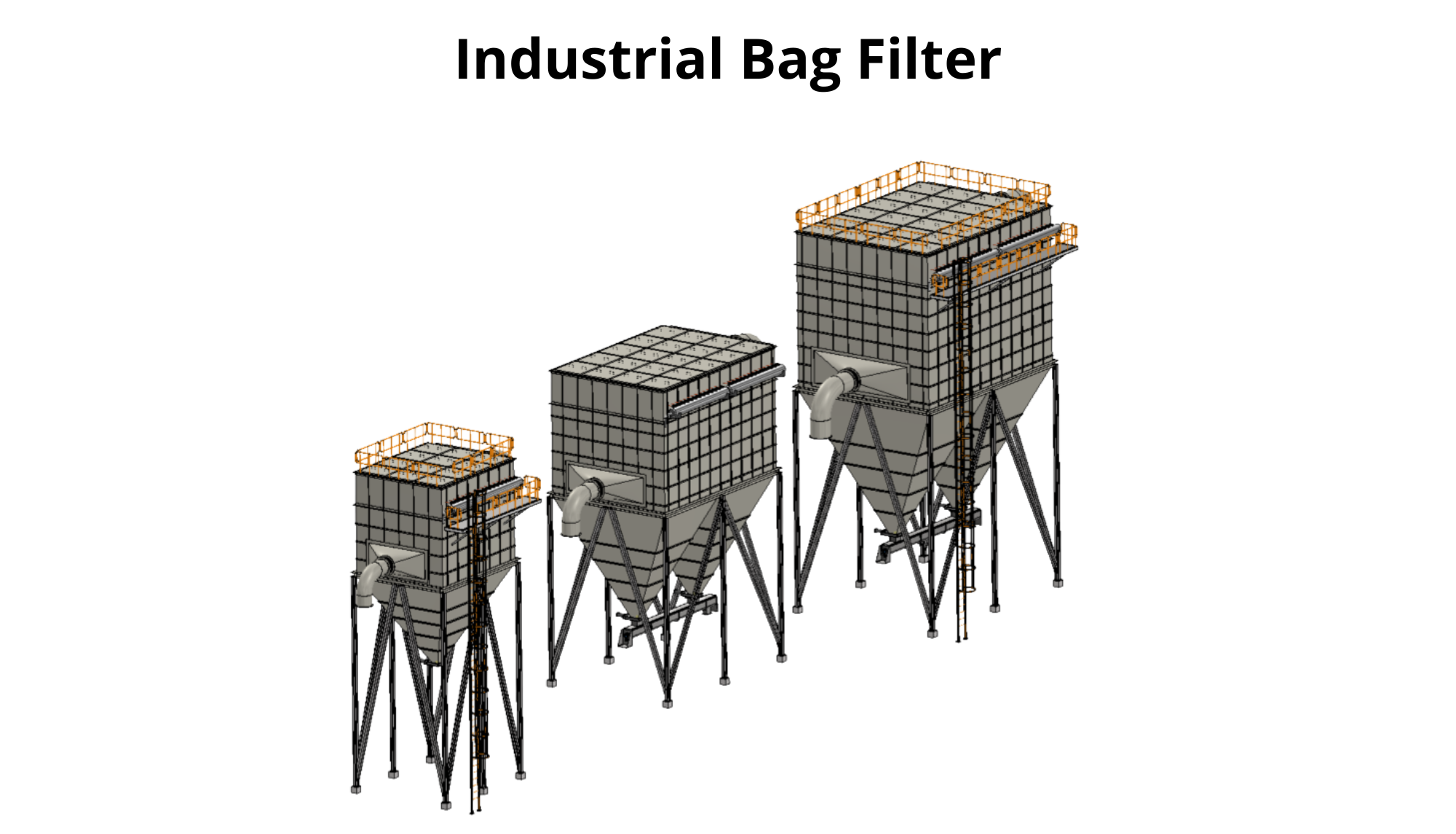
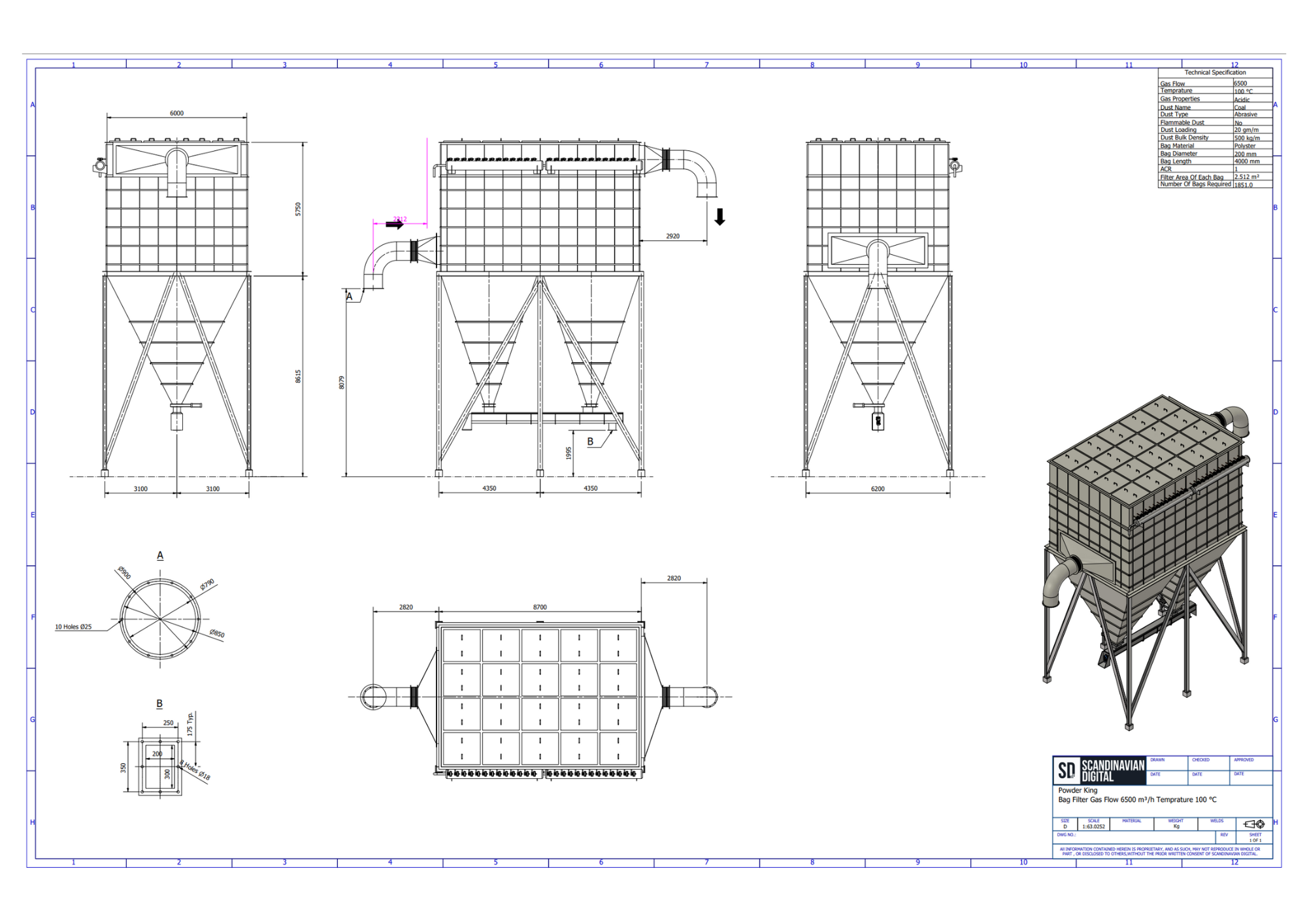
Industrial Bag Filter: Small Capacity (2D drawings and Technical Specifications).

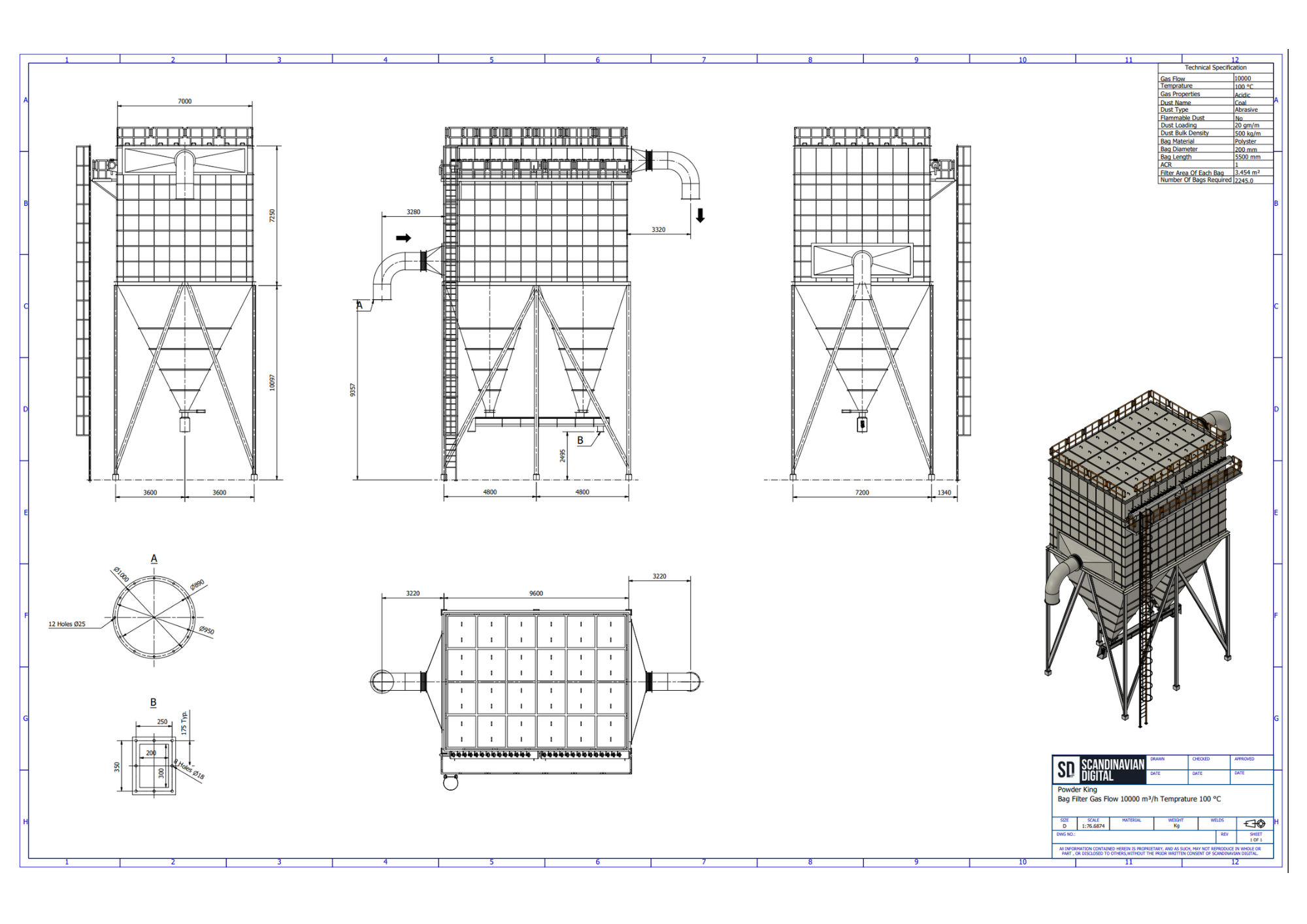
The Scandinavian Digital team developed three types of an industrial Bag Filter: Small, Medium and Large capacity. The different configurations were generated from the same model using Tacton Design Automation Studio. For this project we calculate that the amount of engineering hours saved was around 80% from days to hours.

In addition to the relevant reduction in engineering time we have 5 more important points: Higher quality because of the reduction in errors on-site and in manufacturing workshops also centralized design changes due to a pre-established master model, faster sales with an almost immediate response to customers and to conclude gains throughout the supply chain, for example, manufacturing, sourcing and logistics.

The models used within the configurator are described in an efficient programming language which makes it easy to build the product structure, attributes and other product/business rules, and speeds up response times seen from an end-user perspective.
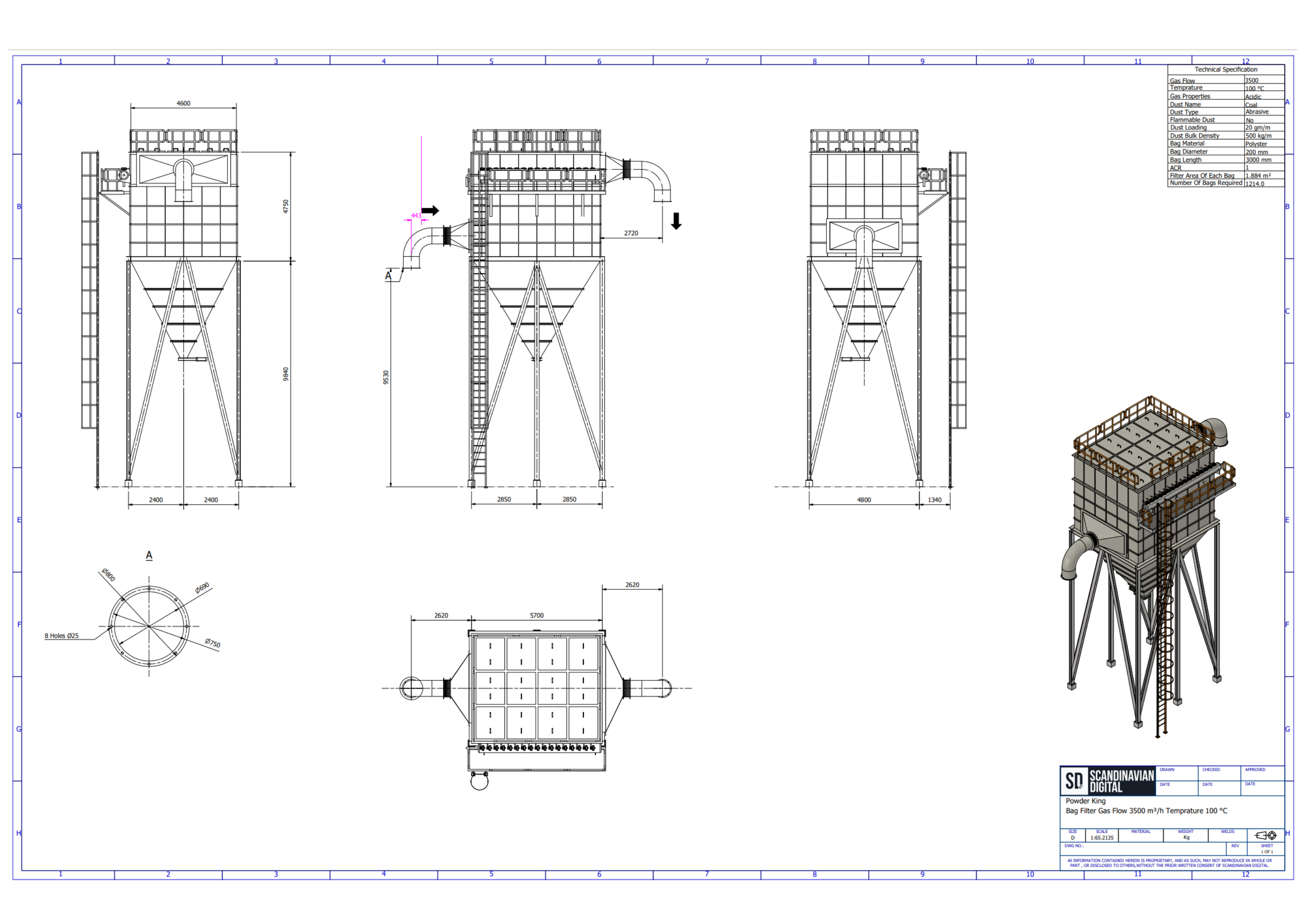
The Technical Specifications are on the right up corner.

Industrial Bag Filter: Medium Capacity (2D drawings and Technical Specifications). 
Before the SD solutions, the existing engineering process was deemed too costly and error-prone by management and the risk of introducing even minor errors in the design due to simple human oversight was sought eliminated. 

Sometimes it is shown that not only the engineering work should be in scope but rather the full customer flow; from the initial creation of a quotation over the manufacturing at the production workshop, to the final delivery, installation and commissioning at the customer site.

Industrial Bag Filter: Large Capacity (2D drawings and Technical Specifications).
 

Read More

The future is in 3D

Engineering documentation in 2D is regarded by many as the only legal documents accompanying a contract for the purchase of a technical product. It is (wrongly) thought that only 2D drawings can represent technical details and instructions about manufacturing as well as measures for accepted tolerances.

A product model in 3D can fully represent the same information – and more – as in a regular 2D drawing. Manufacturing instructions and tolerances can be built into the model and, what is even better, the 3D model can be fed directly into an industrial robot for manufacturing.

If printed 2D documentation is still required, this can be automated from the 3D model itself. 3D functionality and representation can even be contained in a PDF with the so-called MBD format.

Contact Scandinavian Digital for more details and examples.

Read More

Reduce lead times in the proposal and order execution

Scandinavian Digital has helped companies reduce engineering lead-times and elevate quality standards for a wide range of complex products within the heavy engineering industry. All through a user-friendly interface which appeals to individuals from both technical and non-technical backgrounds.

The configuration tool supports and optimises the daily workflow for sales, proposals, orders and spare parts. The system automatically generates various types of output needed to support the proposal and order execution process, including proposal documents, parts lists, instruction manuals, technical data sheets as well as full 2D and 3D documentation and more.

The proprietary Scandinavian Digital configurator currently interfaces to MathCad, STAAD, Dassault SolidWorks and Enovia, Autodesk Inventor, SmartPlant, MS Office and PDMWorks. This supports the configuration process through a one-point-of-truth concept in order to link into complex calculations, engineering data, design rules, technical specifications and product lifecycle information that are to be managed outside of the configurator.

The models used within the configurator are described in an efficient programming language which makes it easy to build the product structure, attributes and other product/business rules, and speeds up response times seen from an end-user perspective.

A configuration platform for any engineering company would contain a wide range of products. Below is a single example of the several hundreds of products that the Scandinavian Digital team has developed with some of its key features.

Industrial Fan

Should the duct turn up/down/right/left ? Should the fan be radially or axially oriented ? Which of possibly 360 degrees should be chosen for mounting (with impact on load calculations) ? Which of 3 different materials should be used for fan blades ? Should the motor voltage cater for the EU or US market and which of 3 efficiency ratings and 23 possible power outputs should be chosen from the 3 different available suppliers?

The preceding initial questions would give close to 3.6 million possible combinations and would not even take into consideration the internal combinations of the mechanical design itself.

Shown above is a single of the more than 100 billion possible fan configurations, complete with i.a. motor, ducting and frames

Ending up with more than 100 billion possible combinations for this – at first glance – simple product, the time it took to finalise the engineering work during order execution was inacceptable for the customers and it was estimated that a considerable amount of the market was lost due to long lead times in order execution.

Prior to the arrival of Scandinavian Digital, previous engineering was overly manual and based on a principle of reusing earlier orders and adjusting stored template designs – the few existing rules were found scattered around in documents, worksheets and bespoke calculation programs.

Further, the existing engineering process was deemed too costly and error-prone by management and the risk of introducing even minor errors in the design due to simple human oversight was sought eliminated.

Now it is possible to keep track of all variants with a configurator-based design. Selecting and sizing the correct fan variant was very important for the company for which an optimisation of the entire E2E flow ended up being the target.

During the initial discussions with Scandinavian Digital, it became apparent that not only the engineering work should be in scope but rather the full customer flow; from the initial creation of a quotation over the manufacturing at the production workshop, to the final delivery, installation and commissioning at the customer site.

The fan configuration model is now capable of generating automated documentation in both 3D and 2D as well as complete parts lists including the Bill Of Materials (BOM).

Read More

Case study : Quotation time reduced from weeks to minutes

In this case study, drawings and quotes from other suppliers were automatically collected and used to offer spare parts to the customer. In addition, sales productivity increased by making the design and the proposal process faster and more flexible.

The product management improved the customer response time significantly by using a configurator. The 3D modelling and engineering design process for spare parts now takes less than 15 minutes, compared to 90-100 hours before.

Key to this efficiency was a joint team effort in understanding the current process flow which involved a considerable amount of repetitive, and – as it turned out – redundant engineering work.

Standardization gives flexibility
Initially, the product managers were hesitant about the project since it took some time to see the connection between configuration and to spare parts. The product manages needed to understand how the tool was used due to the amount of individual configuration options.

Product specialists and managers wanted to make the proposal process faster and more efficient and therefore considered standardizing the design of certain, common components.

In the process “as-is”, there was a team of specialists involved in the quotation process to provide subject matter expertise. They discovered, however, that the product configurator could deliver standardized solutions in targeted areas.

A typical general arrangement drawing for spare parts is now generated automatically by the configurator. The 3D models are generated by the parametric platform and converted into 2D as legal documentation.

Increased global collaboration drives productivity
The configuration platform could create additional opportunities to enhance productivity across the global organization in the large engineering company. By entering design parameters into the configurator, the spare parts team is increasing collaboration across functions and geographies.

Subsequently, a next step has commenced with the ambition of standardizing more design types and options in the broader supply chain network. Suppliers could be provided with information for preliminary proposals such as e.g. quantity of parts, total tonnage, and complexity to initiate their pricing activities.

Sharing knowledge to increase productivity
Implementing the configurator is a perfect example of how engineer-to-order companies can increase their efficiency by capturing knowledge and tools across the entire organisation. The spare parts division is typically located in a completely separate organisation, however, makes use of the same knowledge as in new sales.

Engineering companies have a great opportunity to leverage the use of configurators in additional business areas and for additional products. This will strengthen their value proposition towards their customers, while also making the company organizations more productive internally.

Read More