
TACTON PARTNER

An official Tacton partner

Scandinavian Digital is listed by Tacton as both a Sales Partner and a Services Partner, with competencies in Tacton CPQ and Tacton Design Automation. The partnership started in 2022 around the delivery and sale of Tacton Design Automation in the Nordics and the DACH region, and was expanded in January 2024 to include reselling Tacton CPQ across the same markets.

For a manufacturer, that means Scandinavian Digital can supply the licences and carry out the implementation: from the first workshop on product rules and engineering logic through to a configuration and engineering process that runs in production.

Tacton CPQ

Tacton CPQ is a configure, price, quote platform built for manufacturers whose products have many options, technical dependencies and customer-specific requirements. It guides sales through valid configurations, applies the correct pricing and produces a quotation that reflects the product rules behind it.

Scandinavian Digital works with Tacton CPQ where the quotation process depends on engineering input. The usual starting points are long quote lead times, configuration errors that only surface late in the process, and a sales team that cannot price a product without asking engineering first. Read more about our wider CPQ work.

See Tacton CPQ in the ESP filter demo and the fermentation tank demo, and read how multi-product configuration and quoting works with Tacton CPQ.

Tacton Design Automation

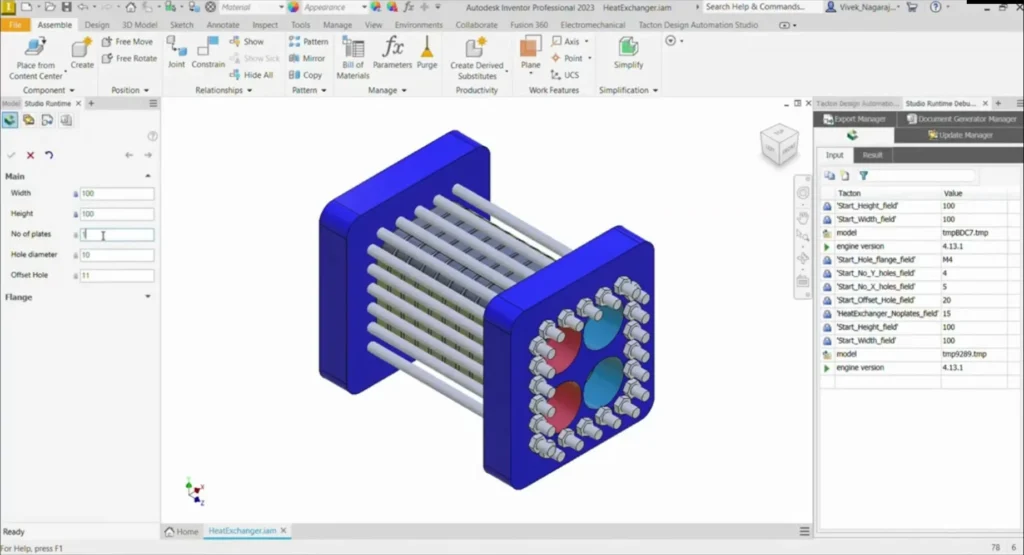
Tacton Design Automation turns engineering rules into automated CAD output. From a single configuration it can generate 3D models, 2D production drawings and bills of materials, without an engineer rebuilding the model by hand for every order.

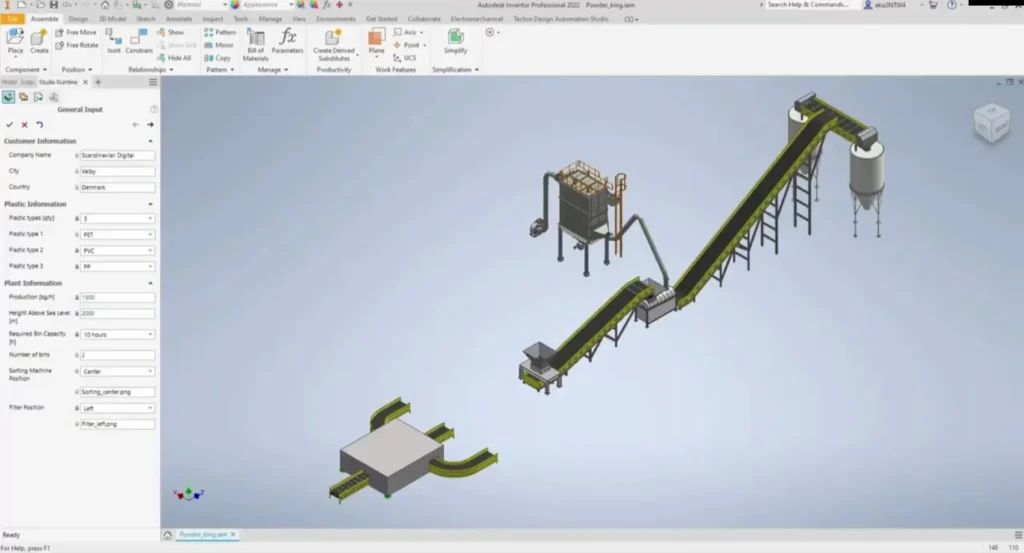
Scandinavian Digital has delivered more than 200 complex CAD automation models across SOLIDWORKS, Autodesk Inventor and PTC Creo. Tacton’s own description of the partnership highlights these three CAD environments. See how it works in our demo library, or read more about Design Automation.

Good places to start are the bag filter demo with Tacton Design Automation Studio, the heat exchanger demo and the conveyor belt demo in SOLIDWORKS.

For teams that will build and maintain models themselves, we run a design automation training programme in three levels, from the basics of part modelling to advanced document generation.

What we help with

Advisory before implementation

Mapping product rules, variants and where engineering time is actually spent, before any software is configured.

Implementation and configuration

Setting up Tacton CPQ and Tacton Design Automation around your product structure and engineering logic.

CAD integration

Connecting configuration to SOLIDWORKS, Autodesk Inventor or PTC Creo so models, drawings and BOMs are generated automatically.

ERP, CRM and PLM/PDM integration

Making configuration data flow into the systems you already use for customers, products and orders.

Optimising an existing setup

Reviewing and extending a Tacton solution that is already running, so it covers more of the product portfolio.

Support and further development

Ongoing development of product rules and automation logic as the portfolio changes.

How a Tacton implementation runs

A Tacton implementation starts with the product, not the software. Before anything is configured, the product rules, the variants and the places where engineering is needed today have to be understood and written down. Everything else is built on that foundation.

1. Product rules workshop. We map how the product is put together: which options exist, which combinations are valid, which dimensions drive which parts, and where a salesperson currently has to ask engineering for an answer.

2. Product model in Tacton CPQ. The rules are built into a configuration model, so sales can only put together products that can actually be made, with the right price attached.

3. CAD automation in Tacton Design Automation. Where the order needs drawings, models or a bill of materials, the same configuration drives the CAD system, so engineering stops rebuilding the model by hand for every order.

4. Integration with ERP, CRM and PLM/PDM. The configuration has to reach the systems that plan, cost and build the product. See IT integration for how we approach that part.

5. One product family first. A single family goes into production use before the rest are added. It proves the model, shows the time saved, and keeps exceptions visible instead of piling them up.

6. Support and further development. Products change, and the rules have to follow. We stay on the solution as new variants, families and markets are added.

Tacton CPQ and Tacton Design Automation: what each one does

The two products solve different halves of the same problem. Tacton CPQ makes sure what is sold is valid and correctly priced. Tacton Design Automation makes sure what is sold can be built without engineering doing the work again by hand. Many manufacturers start with one and add the other once the first is running.

ProductWhat it doesWho uses itWhat comes out
Tacton CPQGuides a configuration through valid options and applies the right priceSales, distributors and sometimes customers directlyA valid configuration, a price and a quotation
Tacton Design AutomationTurns engineering rules into automated CAD outputEngineering, triggered by the configuration3D models, 2D production drawings and bills of materials in SOLIDWORKS, Autodesk Inventor or PTC Creo
Both togetherOne configuration drives both the quote and the engineering documentationSales and engineering on the same product modelA quote and the drawings to build it, from the same set of rules

Why choose Scandinavian Digital as your Tacton partner

Tacton partner in Germany, Austria and Switzerland

The Tacton partnership covers the DACH region as well as the Nordics, for both Tacton CPQ and Tacton Design Automation. For manufacturers in Germany, Austria and Switzerland, that means licences and implementation can come from the same partner, with the same approach described above.

The work itself is the same wherever the factory is: product rules first, then configuration, CAD automation and integration. If you are evaluating Tacton for a site in the DACH region, get in touch and we will start with a conversation about your product.

Frequently Asked Questions

Yes. Scandinavian Digital is listed by Tacton as both a Sales Partner and a Services Partner, with competencies in Tacton CPQ and Tacton Design Automation.

Yes. Scandinavian Digital resells and implements Tacton CPQ across the Nordics and the DACH region, including configuration of product rules, pricing logic and quotation output.

Yes. Tacton Design Automation has been part of the partnership since 2022, and Scandinavian Digital has delivered more than 200 complex CAD automation models.

Scandinavian Digital works with Tacton Design Automation across SOLIDWORKS, Autodesk Inventor and PTC Creo.

Yes. The partnership with Tacton covers the Nordics and the DACH region for both Tacton CPQ and Tacton Design Automation.

With the product, not the software. The first step is a workshop on product rules and engineering logic: which options exist, which combinations are valid and where engineering is needed today. The configuration model in Tacton CPQ and the CAD automation in Tacton Design Automation are built on that.

Yes. As a Tacton Sales Partner, Scandinavian Digital can supply the licences as well as carry out the implementation, across the Nordics and the DACH region.

Tacton CPQ makes sure what is sold is valid and correctly priced, and produces the quotation. Tacton Design Automation turns the same configuration into 3D models, 2D production drawings and bills of materials in the CAD system. Many manufacturers start with one and add the other.

Where to find Tacton’s own product information

Tacton develops the CPQ and Design Automation software described on this page. For product details, release notes and the full feature list, go to Tacton’s own website. For implementation, configuration, CAD and ERP integration and ongoing support, Scandinavian Digital is the partner you work with.

Talk to a Tacton specialist

Less errors

Consistent product rules and structured configuration across the lifecycle reduce mistakes between sales, engineering, procurement, and manufacturing. Teams focus on progress instead of corrections.

Faster sales cycles

Connected configuration and accurate outputs enable quicker responses and clearer customer proposals, improving decision speed and deal flow.

Lower costs

Automating configuration tasks reduces manual engineering work, eliminates rework, and shortens lead times—saving time across the entire value chain.

Scroll to Top