Correct sizing is a critical point to cost reduction and sustainability in the manufacturing industry
Sizing plays a crucial role in the manufacturing industry as it directly affects the quality and functionality of the final product. Correct sizing ensures that the product fits its intended purpose and performs as expected, while incorrect sizing can lead to problems such as poor performance, decreased efficiency, and even safety hazards. In counterpoint, there are many benefits such as efficiency and reduce waste in the manufacturing process. For example, if a part is too large, it may be more difficult to manufacture, and may require more material to produce. 

Correct sizing also ensures that the product is of high quality, performs well, and meets the desired specifications. This helps to ensure customer satisfaction and repeat business. 

Cost-effectiveness is a very important benefit. With an accurate sizing it is possible to reduce costs by minimizing waste and maximizing efficiency. On the other hand, incorrect sizing can result in waste, rework, and increased costs. A case study by the Lean Enterprise Institute found that a company was able to reduce material waste by 30% and increase productivity by 50% by improving their sizing process. This resulted in significant cost savings for the company.
A study by the National Institute of Standards and Technology (NIST) found that dimensional measurement errors can increase manufacturing costs by up to 12.5%. This includes errors in sizing, as well as other measurements such as roundness, straightness, and flatness. An additional factor to consider when selling equipment is the accurate sizing of the product based on customer requirements. If the equipment you offer is oversized for the customer’s needs, there is a significant chance that you may not win the order. Consequently, it is crucial to provide appropriately sized solutions tailored to the specific requirements of each customer, as inaccurately sized equipment can also lead to lost orders.

Overall, correct sizing is critical in the manufacturing industry to ensure that products meet the required specifications established by clients, perform well, and are safe for use. By minimizing waste, maximizing efficiency, and avoiding costly errors, companies can save money and improve their bottom line.
To learn more about our services or watch DEMOS with the signature of the Scandinavian Digital team, you can contact us here.

Read More

Engineering Design Automation improving food safety and sustainability for the food industry

Engineering automation can provide numerous benefits to the food industry, including improvements in food safety and sustainability. By automating the engineering process, the industry can better control contamination during food and ingredient processing. This involves adhering to safety and hygiene regulations during the design or redesign of machines, taking into account the specific requirements of each location, size, and product.

Additionally, EDA (Engineering Design Automation) aid companies to match regulatory compliance as well and ensures that production processes are documented.

Another important aspect to consider is the safety of workers who operate the equipment. Just as parameters are established for food safety, rules are also created to maintain the safety of those who operate the machines. During the design of automation systems, new safety features such as doors, alarms, and lockers can be installed to monitor key parameters such as temperature and pressure in real-time. This ensures that food is processed under controlled conditions while also protecting the safety of workers.

High-quality food products can be achieved not only through safety measures but also by ensuring accurate measurement and control of ingredients. A well-configured equipment or system can achieve this, resulting in consistent and superior food products. This consistency is particularly valuable for companies that have established themselves in the market or are striving to do so. With a consistent product, clients receive the same high-quality food repeatedly, or even an improved version of it. Additionally, the configuration of these systems can monitor and control the entire production process, ensuring that each step meets the necessary specifications.

Sustainability is another crucial topic that has become a global trend and necessity. Automated systems can play a key role in reducing waste by optimizing the utilization of resources like energy and water, as well as reducing spoilage and waste during the production process. These systems can also help minimize food waste by ensuring that products are packaged and transported in a manner that reduces spoilage and waste. Investing in automation is an excellent way to drive innovation and growth in the food industry while also promoting sustainability.

The main countries where engineering automation is a focus are US as a leader, Germany that is known for its advanced manufacturing industry, Japan has a long history of automation as well as the Netherlands that is a leader in agricultural technology and automation and some others as Australia, Canada and China.

The Scandinavian Digital Team has experience in the food industry, with one of the most skillful teams in configuration and automation in the world, we can affirm that one of our clients saved at least 20.000 men hours last year and achieved consistency and a higher quality in at least 17 equipment.

Watch our industrial filter being configured, this is one of our products for the food industry to dry powder.

Read More

Design Automation for Embedded Systems

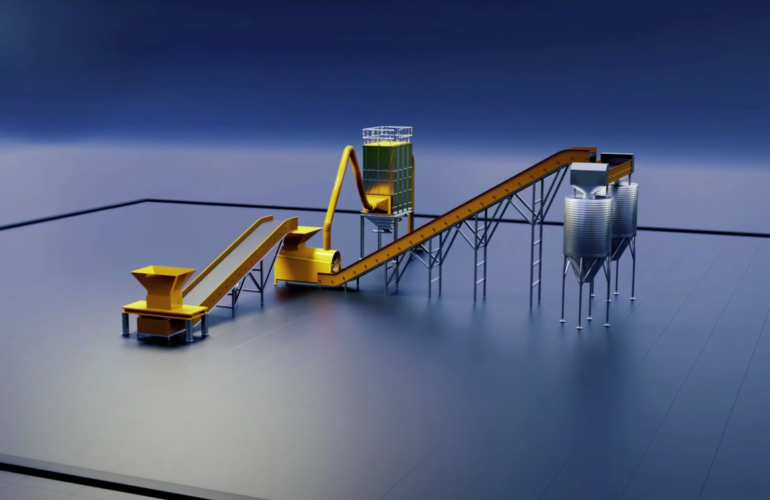
The Scandinavian Digital team has expertise in both product configuration and full system layout design, including plants for plastic recycling, chocolate production, embedded systems for cement manufacturing, and many others. This comprehensive approach to design automation can bring significant benefits to manufacturers, both in terms of operational performance and overall management. 
 
A system layout in machinery denotes an arrangement of different elements and systems within a manufacturing facility or production line. It includes the right placement and arrangement of machines, tools, workstations, and other components to enhance the use of space and ensure efficient and effective operations. 

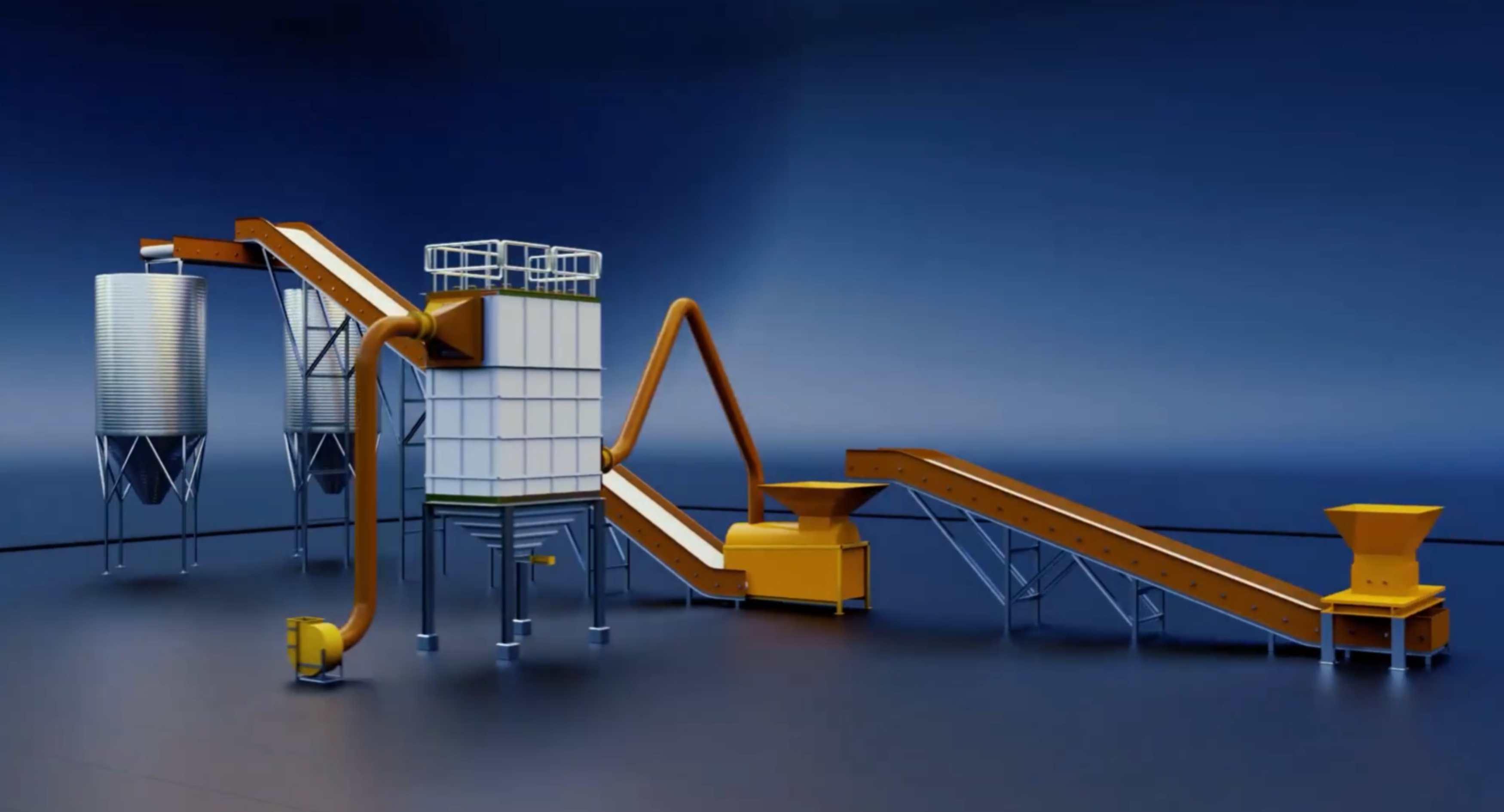
Recycling Plant – Scandinavian Digital Embedded System

The system layout can have a relevant impact on the complete productivity and efficiency of the manufacturing processes. Circumstances like the placement of machines, the flow of materials and products, and the ease of access to equipment affects the speed and quality of production. 

An effective system layout will take into consideration factors such as the size and capacity of machines, the materials and products being produced, and the flow of workers and materials through the facility. The goal of a system layout in machinery is to optimize the use of space and resources, increase efficiency and productivity, and ensure the quality and consistency of the final product.

One of the main benefits of configure a full system layout is scalability, automating systems can help to control large and complex projects more effectively, making it viable for organizations to scale up their operations as projected or as needed. Another point to be highlighted is the possibility of a better cost control, after all it will reduce the time and resources required for manual processes, assisting to control costs and improve profitability. 
 
And to conclude, configure a full system will reduce time to market of products, owing to the fact that a suitable configuration will speed up the design and engineering processes and consequently allow products to be brought to market much faster. 


Watch how we configured the Full Plant on Soliworks with Tacton Design Automation Studio: Full System DEMO – Autodesk Inventor – YouTube

Read More

The outputs of implementing Engineering Automation

These are 10 aftereffects of implementing Engineering Automation:

    • One product model for all commercial requirements.
    • Easy to configure for non-technical people.
    • Configurable down to the detailed technical requirements.
    • Able of being extended to a sales configurator.
    • Capable of outputting sales Documents automatically.
    • Proposal documents, sales order documents data sheets and more.
    • Automated generation of 3D CAD models.
    • Automated generation of 2D Drawings.
    • Automated product sizing and engineering designs.
    • Automated generation of Technical Documents.
      BOM (Bill Of Materials), BOQ (Bill Of Quantity), Step-Files, flat patterns, manuals cost calculations, etc

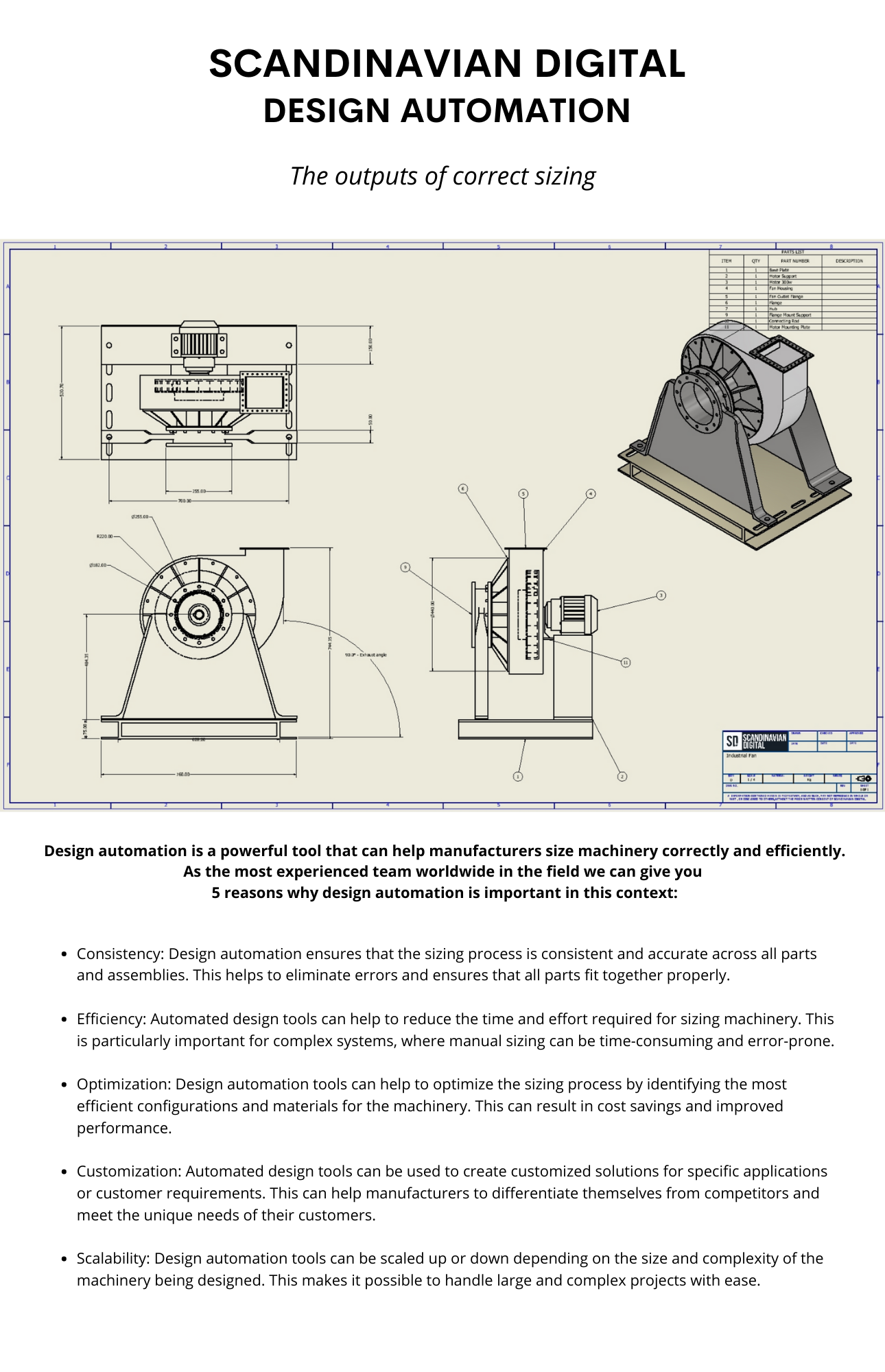
Now, that you know the return you can have with the implementation. Let’s see one of our products, the 3D models, 2D drawings and Technical Specifications.


Watch the configuration DEMO here.

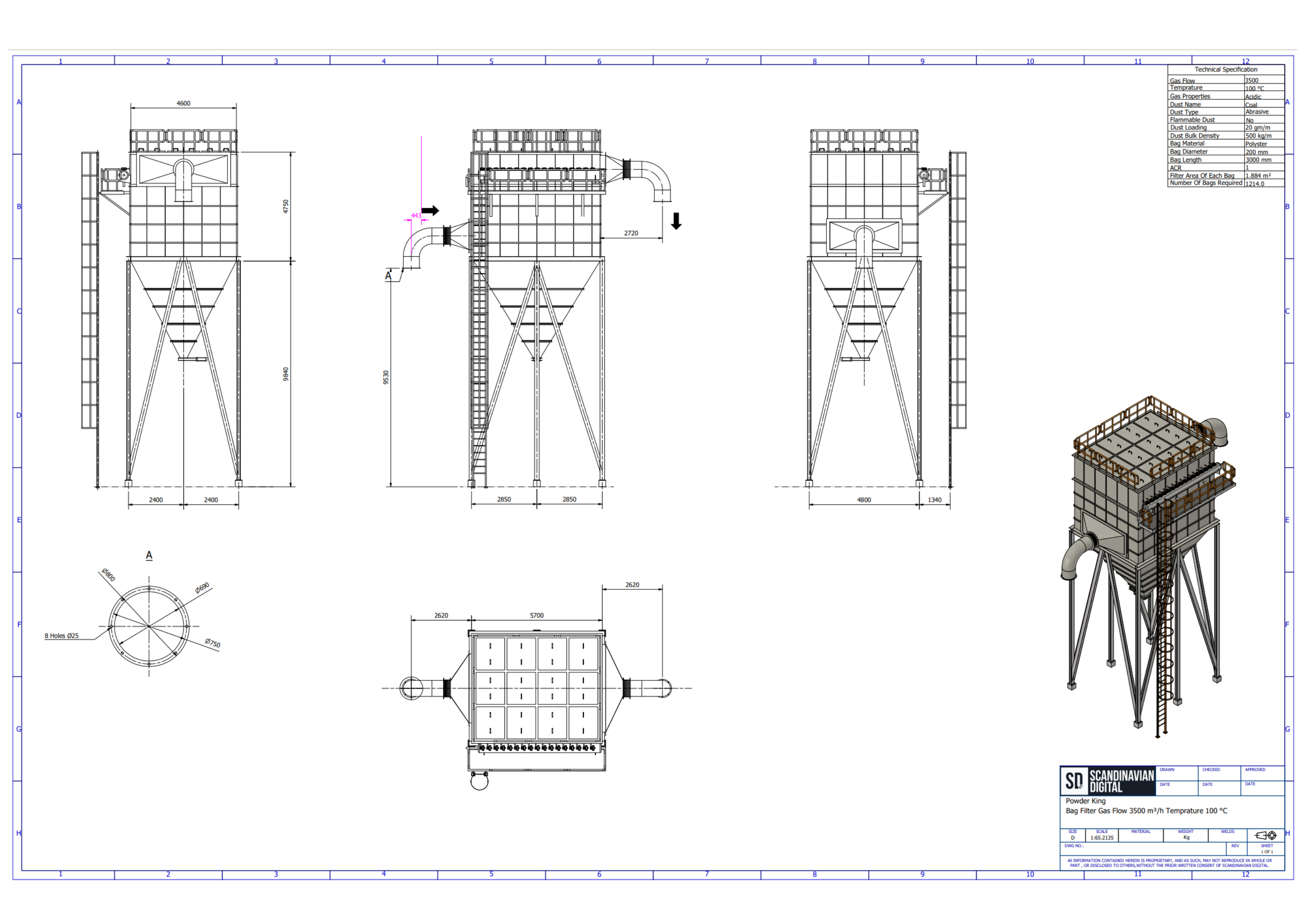
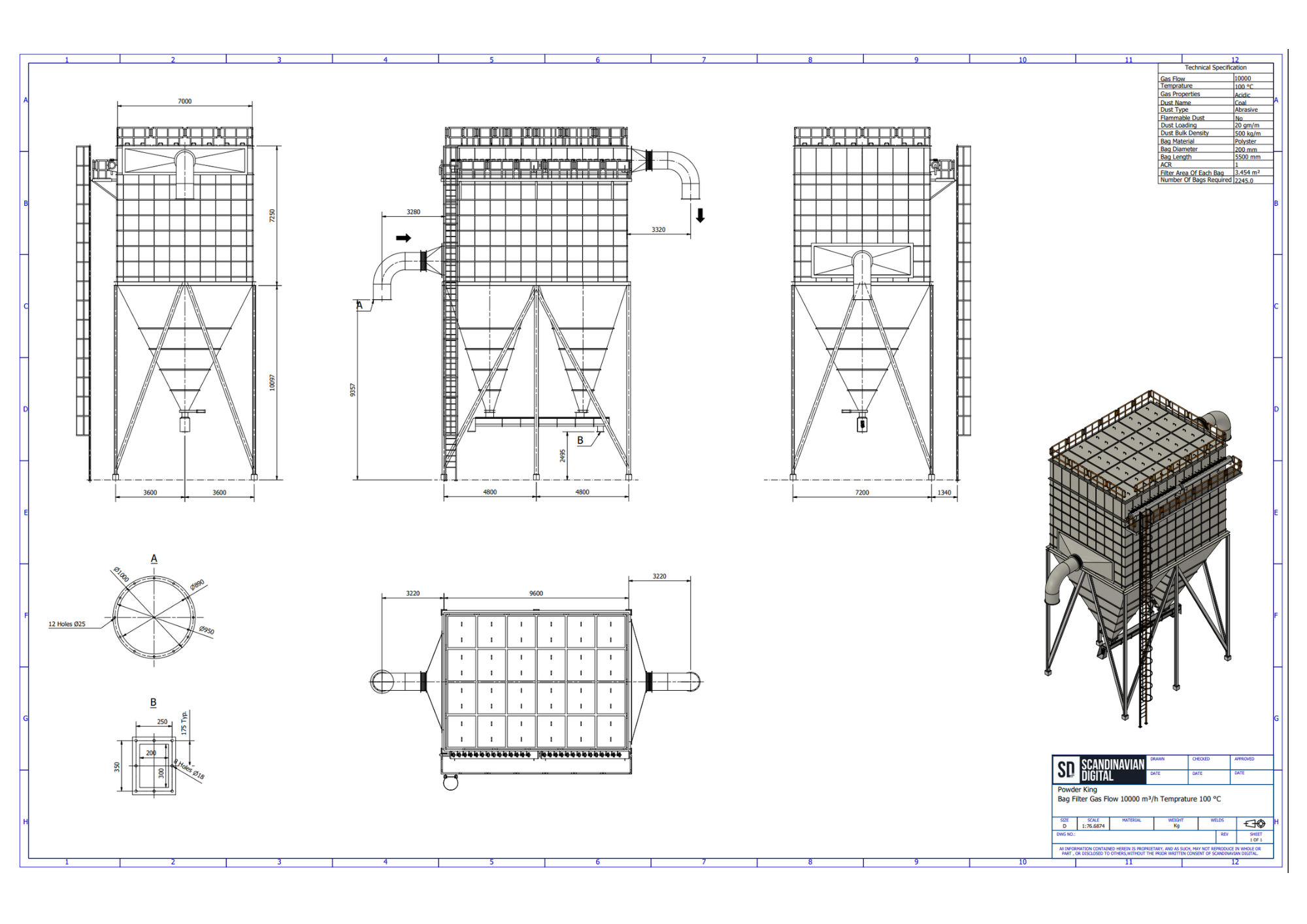
Industrial Bag Filter: Small Capacity (2D drawings and Technical Specifications).

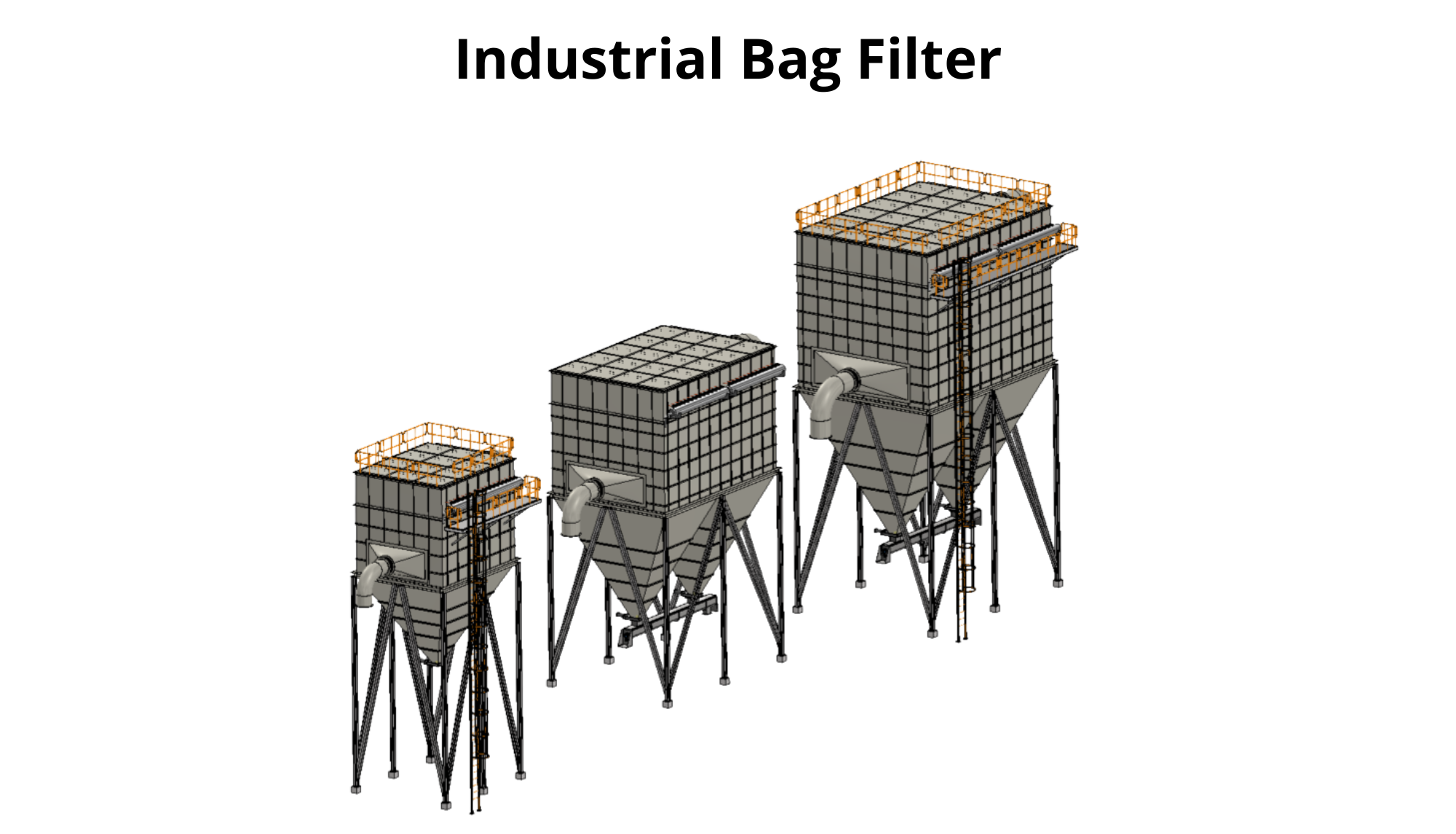
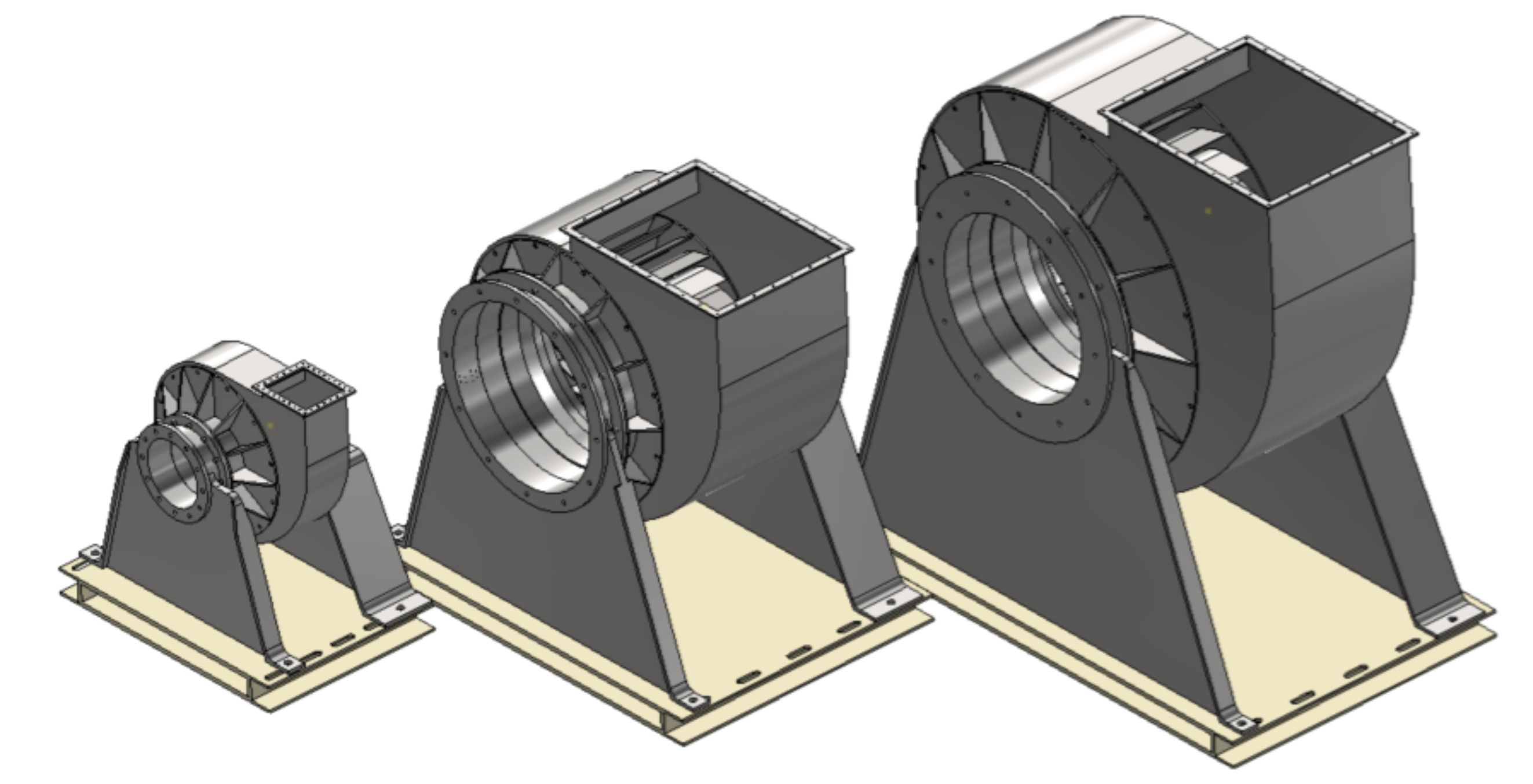
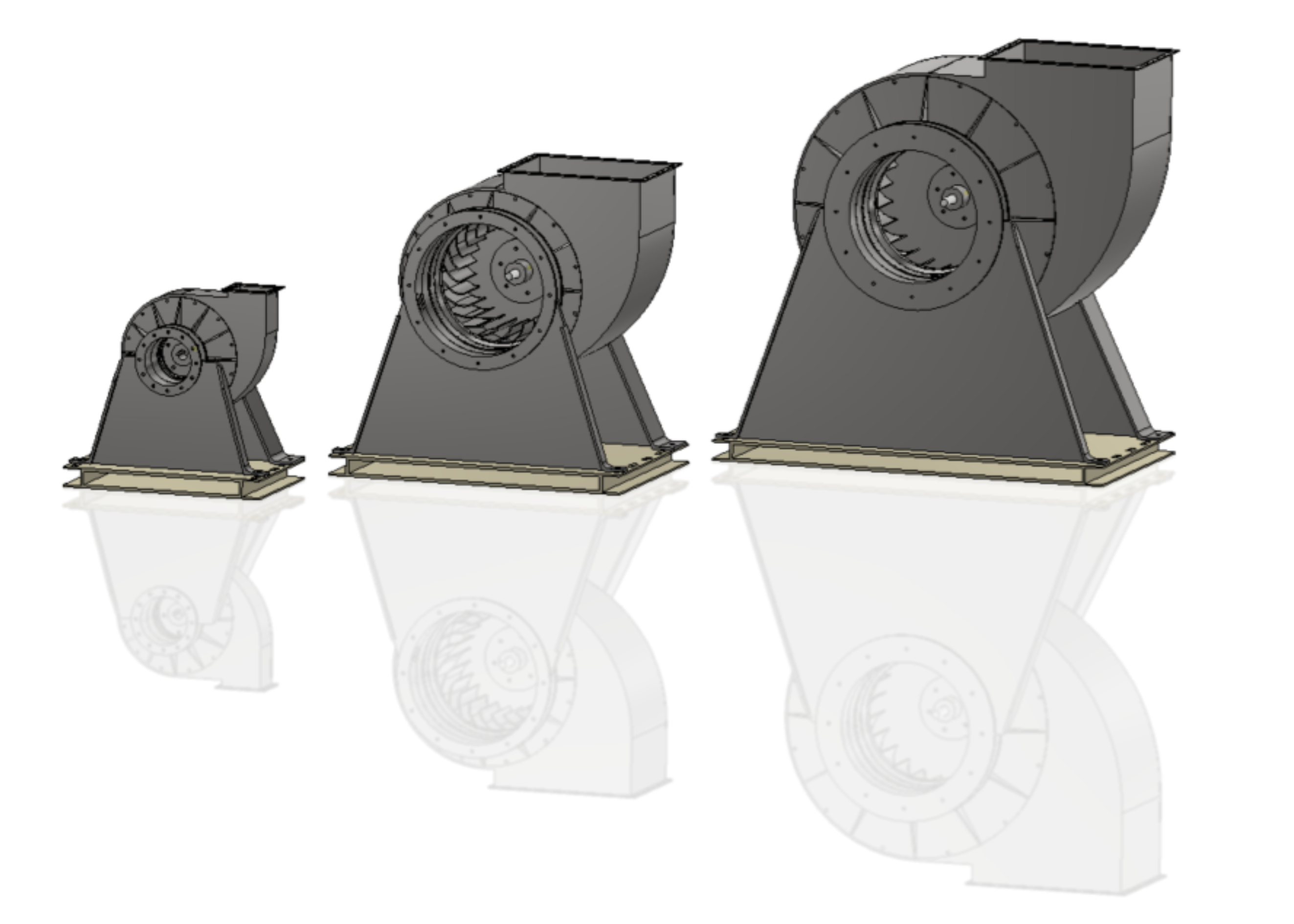
The Scandinavian Digital team developed three types of an industrial Bag Filter: Small, Medium and Large capacity. The different configurations were generated from the same model using Tacton Design Automation Studio. For this project we calculate that the amount of engineering hours saved was around 80% from days to hours.

In addition to the relevant reduction in engineering time we have 5 more important points: Higher quality because of the reduction in errors on-site and in manufacturing workshops also centralized design changes due to a pre-established master model, faster sales with an almost immediate response to customers and to conclude gains throughout the supply chain, for example, manufacturing, sourcing and logistics.

The models used within the configurator are described in an efficient programming language which makes it easy to build the product structure, attributes and other product/business rules, and speeds up response times seen from an end-user perspective.

The Technical Specifications are on the right up corner.

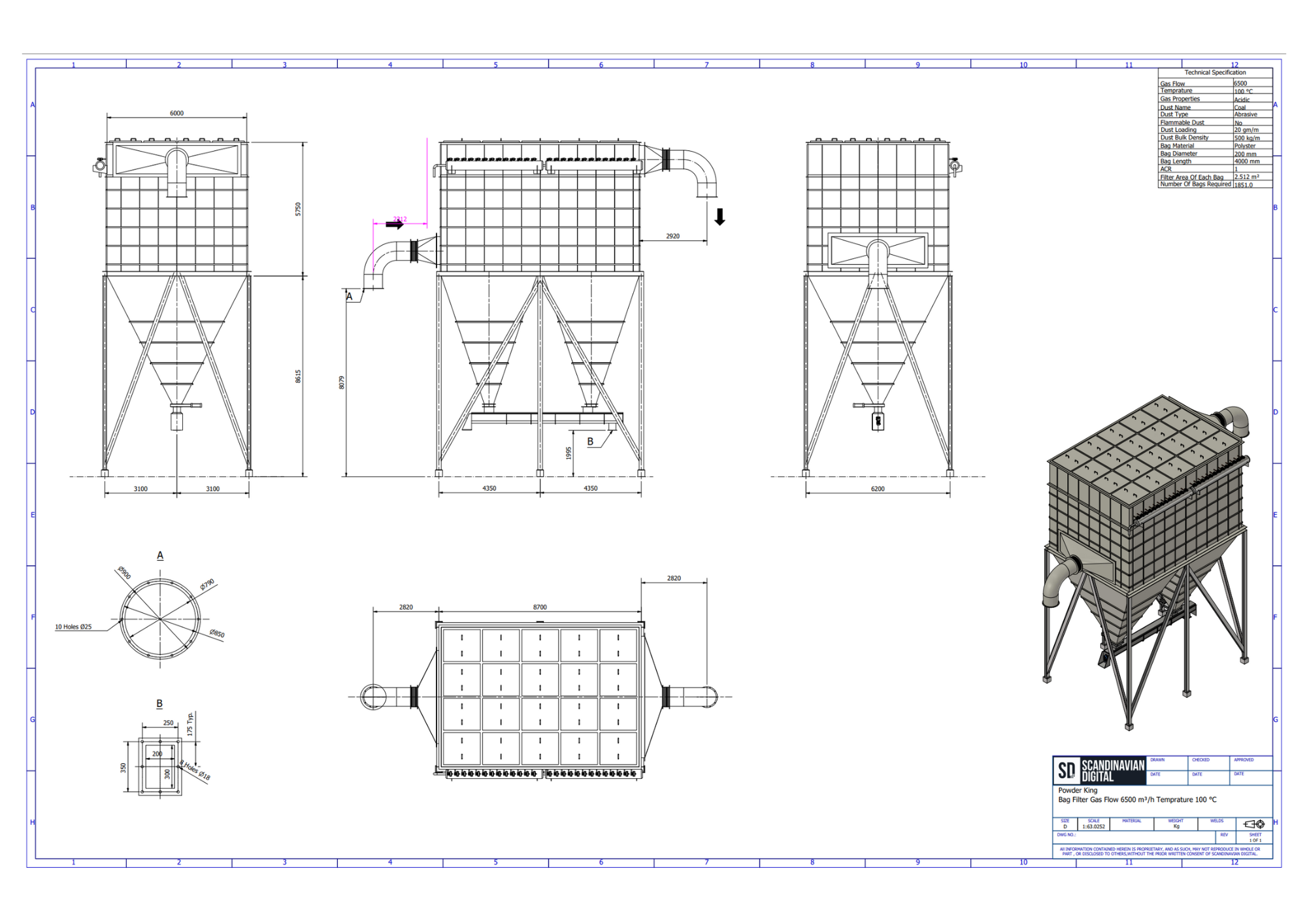
Industrial Bag Filter: Medium Capacity (2D drawings and Technical Specifications). 
Before the SD solutions, the existing engineering process was deemed too costly and error-prone by management and the risk of introducing even minor errors in the design due to simple human oversight was sought eliminated. 

Sometimes it is shown that not only the engineering work should be in scope but rather the full customer flow; from the initial creation of a quotation over the manufacturing at the production workshop, to the final delivery, installation and commissioning at the customer site.

Industrial Bag Filter: Large Capacity (2D drawings and Technical Specifications).


Read More

The end of never-ending engineering

Morten Hugo Bennick, CTO and Senior Partner at Scandinavian Digital and internally regarded as “Mr. Config,” provides insights into why many companies still resist automating engineering processes, instead relying heavily on the human brain to tackle challenges that could be resolved in minutes using Symbolic AI.

With over 20 years of expertise in configuration, Morten speaks with authority, emphasizing that symbolic AI is no joke—it’s a powerful critique of companies that aim to stay competitive yet fail to adopt modern solutions like digitalisation, task automation, and configurators. Scandinavian Digital is leading the charge in changing its clients’ daily results and engineering efficiency through the application of symbolic AI.

Symbolic AI plays a protagonist role in the configurators Scandinavian Digital employs. These configurators transform data input into symbolic outputs—such as 3D models, 2D drawings, and other engineering assets—allowing complex engineering challenges to be solved quickly, efficiently, and with minimal error. As Morten explains, “Anything can be configured,” and in order to improve engineering tasks and results… it must be!

The reality of “never-ending engineering” isn’t just a notion, it’s a costly, time-intensive issue that symbolic AI can alleviate. According to Morten, engineering processes will not end completely, but they can be significantly reduced, saving companies substantial time and resources. This reduction in repetitive engineering tasks means skilled professionals can shift focus to innovation, data security, and strategic goals rather than spending months on tasks that could be streamlined to a week or less. Furthermore, the automation of these processes ensures that critical knowledge stays within the company, rather than leaving with departing employees. You can see the benefits of using symbolic AI for CPQ and design automation across Scandinavian Digital’s six value areas.

Morten advocates for automated engineering processes with confidence, stating, “We expect that the investment will reach break-even within 1-3 years.” He adds that using Symbolic AI not only reduces errors but also grants engineers more time for innovation, increasing growth opportunities for the company.

Scandinavian Digital offers a comprehensive process for organizations looking to modernise, beginning with CPQ (Configure, Quote, and Price) and extending to advanced Design Automation projects. Through Symbolic AI, Scandinavian Digital provides end-to-end solutions that deliver long-term value, enabling companies to operate smarter, faster, and with greater precision.

For companies ready to embrace the future of engineering, Scandinavian Digital is here to transform your engineering bottlenecks with symbolic AI.

Read More

Supplier integrations

Through a collaboration between an engineering to order company and one of their supplier the team behind Scandinavian Digital have implemented a web based solution. This maintain up-to-date information about suppliers and integrates directly with them by accessing the suppliers configuration program from the companies configuration platform. In short two configurators in different companies finding the best solution.

Complete, accurate and well-maintained supplier records are crucial for the smooth running of engineering company business operations. It helps in improving efficiency, productivity and significant reduced lead time.

The company configurator is implemented with a supplier’s configurator which means the two configurators will “negotiate” the most optimum solution during sizing and pricing of the equipment.

The configurators platform is a highly modularized web-based system with a web API that allows to create new interfaces for engineering software tools like SolidWorks, Inventor, SmartPlant, MathCAD, STAAD.Pro, Excel to be used a cloud-based services. This technology enables the end-users to have easy knowledge of the engineering tools they use via the configurator platform.

The configurator fulfills the industry 4.0 standard and can work directly with suppliers for calculating correct prices and retrieving the correct customized product documentation based on the specification created by users.

Read More

The future is in 3D

Engineering documentation in 2D is regarded by many as the only legal documents accompanying a contract for the purchase of a technical product. It is (wrongly) thought that only 2D drawings can represent technical details and instructions about manufacturing as well as measures for accepted tolerances.

A product model in 3D can fully represent the same information – and more – as in a regular 2D drawing. Manufacturing instructions and tolerances can be built into the model and, what is even better, the 3D model can be fed directly into an industrial robot for manufacturing.

If printed 2D documentation is still required, this can be automated from the 3D model itself. 3D functionality and representation can even be contained in a PDF with the so-called MBD format.

Contact Scandinavian Digital for more details and examples.

Read More

Reduce lead times in the proposal and order execution

Scandinavian Digital has helped companies reduce engineering lead-times and elevate quality standards for a wide range of complex products within the heavy engineering industry. All through a user-friendly interface which appeals to individuals from both technical and non-technical backgrounds.

The configuration tool supports and optimises the daily workflow for sales, proposals, orders and spare parts. The system automatically generates various types of output needed to support the proposal and order execution process, including proposal documents, parts lists, instruction manuals, technical data sheets as well as full 2D and 3D documentation and more.

The proprietary Scandinavian Digital configurator currently interfaces to MathCad, STAAD, Dassault SolidWorks and Enovia, Autodesk Inventor, SmartPlant, MS Office and PDMWorks. This supports the configuration process through a one-point-of-truth concept in order to link into complex calculations, engineering data, design rules, technical specifications and product lifecycle information that are to be managed outside of the configurator.

The models used within the configurator are described in an efficient programming language which makes it easy to build the product structure, attributes and other product/business rules, and speeds up response times seen from an end-user perspective.

A configuration platform for any engineering company would contain a wide range of products. Below is a single example of the several hundreds of products that the Scandinavian Digital team has developed with some of its key features.

Industrial Fan

Should the duct turn up/down/right/left ? Should the fan be radially or axially oriented ? Which of possibly 360 degrees should be chosen for mounting (with impact on load calculations) ? Which of 3 different materials should be used for fan blades ? Should the motor voltage cater for the EU or US market and which of 3 efficiency ratings and 23 possible power outputs should be chosen from the 3 different available suppliers?

The preceding initial questions would give close to 3.6 million possible combinations and would not even take into consideration the internal combinations of the mechanical design itself.

Shown above is a single of the more than 100 billion possible fan configurations, complete with i.a. motor, ducting and frames

Ending up with more than 100 billion possible combinations for this – at first glance – simple product, the time it took to finalise the engineering work during order execution was inacceptable for the customers and it was estimated that a considerable amount of the market was lost due to long lead times in order execution.

Prior to the arrival of Scandinavian Digital, previous engineering was overly manual and based on a principle of reusing earlier orders and adjusting stored template designs – the few existing rules were found scattered around in documents, worksheets and bespoke calculation programs.

Further, the existing engineering process was deemed too costly and error-prone by management and the risk of introducing even minor errors in the design due to simple human oversight was sought eliminated.

Now it is possible to keep track of all variants with a configurator-based design. Selecting and sizing the correct fan variant was very important for the company for which an optimisation of the entire E2E flow ended up being the target.

During the initial discussions with Scandinavian Digital, it became apparent that not only the engineering work should be in scope but rather the full customer flow; from the initial creation of a quotation over the manufacturing at the production workshop, to the final delivery, installation and commissioning at the customer site.

The fan configuration model is now capable of generating automated documentation in both 3D and 2D as well as complete parts lists including the Bill Of Materials (BOM).

Read More

SD is an official reseller for Tacton’s Design Automation solutions in the Nordics and DACH regions

Scandinavian Digital partners with the Tacton team.

Adding to its business services, Scandinavian Digital will now sell and deliver Tacton’s best-of-breed Design Automation solutions in the Nordics and DACH regions for the full range of computer-aided design (CAD) systems (SolidWorks, Autodesk Inventor and PTC Creo). The partnership will enable more design and manufacturing companies to optimize their engineering and design processes through software, training, and full-service manufacturing business solutions. Scandinavian Digital has already delivered more than 200 Design Automation models to major clients in these regions, and has plans to further expand Tacton’s presence as an official reseller.

Engineers today are under incredible pressure to generate 2D and 3D CAD drawings on time due to custom designs. They must constantly update or create new drawings as needs change, resulting in significant human labor. To address this, Tacton Design Automation creates comprehensive 2D drawings and 3D models of bespoke, customized products and parts automatically, allowing engineers to focus on other higher value tasks. As a result, companies can eliminate costly design errors, reduce lead time, cost of hours and goods, and improve product quality. Further, there is no programming or IT expertise needed, making it fast and easy to introduce and update products.

“Our partnership with Scandinavian Digital will allow us to expand our company’s reach in key regions, and offer our leading Design Automation solution to more joint customers,” said Viveka Tengö, VP Global Channel and Alliances at Tacton. “With our solutions, customers can accomplish design projects in a much shorter time and with a standardized quality. We are helping sales and engineering teams work better together and increase their efficiency to drive their organization’s bottom line. This partnership is key to making this a reality for today’s leading companies in the Nordics and DACH regions.”

“We are very satisfied with our partnership with Tacton,” said Simon Nielsen, CEO and Co-Founder at Scandinavian Digital. “Tacton’s state-of-the-art Design Automation tool coupled with Scandinavian Digital’s strong knowledge in product complexity helps customers easily utilize 3D CAD models to empower their businesses. Tacton’s Design Automation is a game changer for any company with complex engineered products.”

“This partnership will help advance our mutual goals in the Nordics and DACH regions,” said Morten Hugo Bennick, Managing Partner at Scandinavian Digital. “With this solution, manufacturing teams can feel assurance and support to configure their products with 100 percent valid configuration and significantly reduced errors and costs. In fact, we’ve already seen success with managing hundreds of Design Automation projects for Tacton, and look forward to our future growth.”

Read More

Case study : Quotation time reduced from weeks to minutes

In this case study, drawings and quotes from other suppliers were automatically collected and used to offer spare parts to the customer. In addition, sales productivity increased by making the design and the proposal process faster and more flexible.

The product management improved the customer response time significantly by using a configurator. The 3D modelling and engineering design process for spare parts now takes less than 15 minutes, compared to 90-100 hours before.

Key to this efficiency was a joint team effort in understanding the current process flow which involved a considerable amount of repetitive, and – as it turned out – redundant engineering work.

Standardization gives flexibility
Initially, the product managers were hesitant about the project since it took some time to see the connection between configuration and to spare parts. The product manages needed to understand how the tool was used due to the amount of individual configuration options.

Product specialists and managers wanted to make the proposal process faster and more efficient and therefore considered standardizing the design of certain, common components.

In the process “as-is”, there was a team of specialists involved in the quotation process to provide subject matter expertise. They discovered, however, that the product configurator could deliver standardized solutions in targeted areas.

A typical general arrangement drawing for spare parts is now generated automatically by the configurator. The 3D models are generated by the parametric platform and converted into 2D as legal documentation.

Increased global collaboration drives productivity
The configuration platform could create additional opportunities to enhance productivity across the global organization in the large engineering company. By entering design parameters into the configurator, the spare parts team is increasing collaboration across functions and geographies.

Subsequently, a next step has commenced with the ambition of standardizing more design types and options in the broader supply chain network. Suppliers could be provided with information for preliminary proposals such as e.g. quantity of parts, total tonnage, and complexity to initiate their pricing activities.

Sharing knowledge to increase productivity
Implementing the configurator is a perfect example of how engineer-to-order companies can increase their efficiency by capturing knowledge and tools across the entire organisation. The spare parts division is typically located in a completely separate organisation, however, makes use of the same knowledge as in new sales.

Engineering companies have a great opportunity to leverage the use of configurators in additional business areas and for additional products. This will strengthen their value proposition towards their customers, while also making the company organizations more productive internally.

Read More