Customer Case – Automation Success in the Process Manufacturing Industry

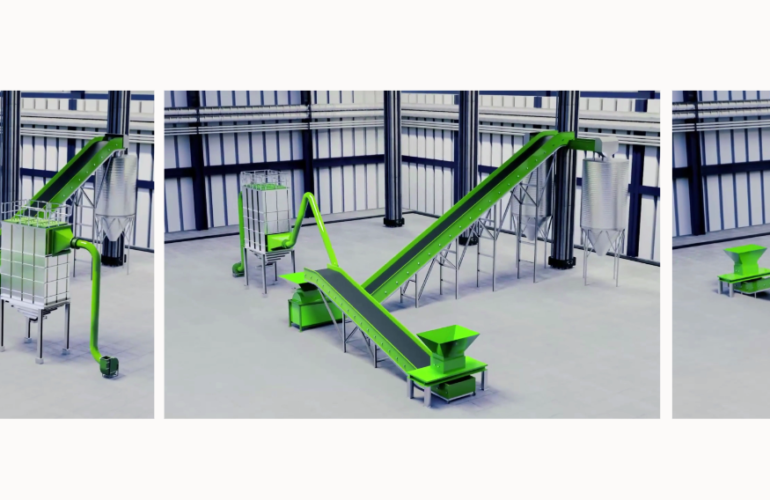
How a Global Industry Leader Cut Engineering Time and Bridged Sales–Engineering Collaboration with Symbolic AI in Product Specification

Client Background
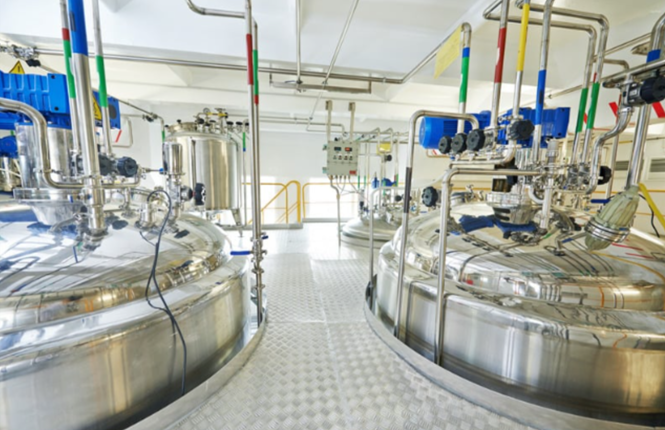
Our client is a global technology company that develops advanced systems and equipment for process industries. With a strong worldwide presence, it is recognized for its engineering excellence and focus on reliable, high-performance solutions.

Our global team, working together with the client’s teams in India and in Denmark configured several products, covering cyclones, dispersers, fluid beds and bag filters. The long list of products in the portfolio all require a high level of engineering and customization to meet customer-specific requirements.
The Challenge
As with many complex engineering-driven organizations, the client was facing structural inefficiencies that were slowing down delivery and impacting the quality of delivered products. Key issues included:

  • Inconsistent documentation and inaccuracies in bills of materials
  • Lengthy lead times for generating technical drawings
  • A frequent disconnect between what was quoted during the sales process and what could be produced within technical constraints

These challenges not only increased operational costs but also placed a heavy burden on the engineering department, which had to spend valuable time correcting and reworking data and designs.

Showing their expectation with the project and with our CONFIG2 platform the client stated that:

“We are looking for repeatability, scalability to support our product portfolio, also flexibility, a 24/7 online configurator and a team to provide a quality product through up-to date engineering process and tools.”

Client Project Manager

Our Approach
To address these issues, Scandinavian Digital implemented its five-phase rollout model over the course of a year. The program was designed and executed in close collaboration with the client’s cross-functional team, including product managers, engineering teams and product specialists. This ensured a high degree of alignment across departments from the very beginning.
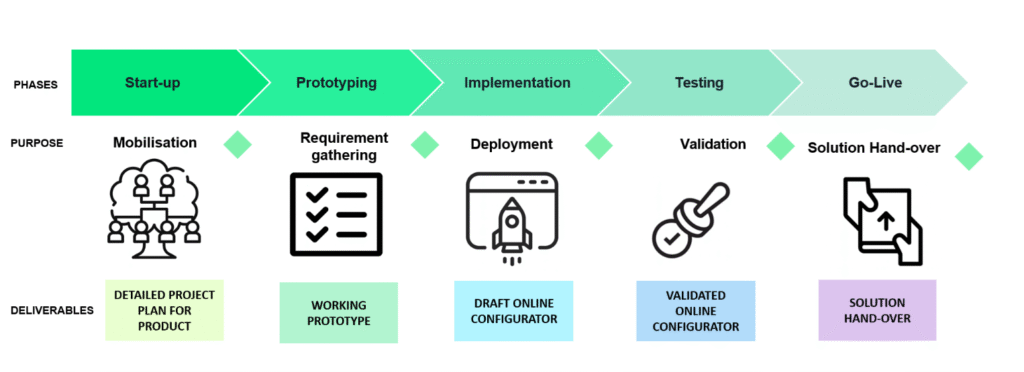
 

Scandinavian Digital 5 Phase Model


Main Obstacles Identified
During the initial assessment phase, several systemic issues became clear:

  • Product rules were undocumented or scattered across departments
  • Communication gaps existed between sales, engineering, layout designers and procurement
  • There was no standard process for translating customer requirements into technically feasible solutions
  • Engineering bottlenecks since few key resources possessed critical product knowledge

The Solution
To overcome these challenges, Scandinavian Digital delivered an end-to-end solution that included:

  • Automated generation of 2D CAD drawings and 3D CAD models
  • Server-side modelling through CONFIG2 for centralized rule and logic management
  • Standardization of modular components across product families
  • A symbolic AI-powered product model to capture continuous learning, validation, and refinement of rules

Running the configuration model on the server through CONFIG2 provided the client with a scalable, flexible architecture that significantly reduced the workload on the engineering team.

“This project was a great example of what can be achieved through close collaboration and mutual trust. Thanks to our strong partnership with the customer, we not only delivered a successful engineering solution but also helped save significant hours through smart, efficient design. Success like this is always a team effort.”

Project Manager, Scandinavian Digital 


Deliverables and Results
The impact of the solution was substantial. Key achievements included:

  • Reduction in engineering hours by 80 to 95 % on the products in use and the same estimation for the remain products removing engineering bottlenecks
  • Introduction of a smart configurator with built-in product constraints securing technical feasible products are sold
  • Delivery of validated, consistent, and complete technical documentation to secure product knowledge is captured
  • Reusable automation logic that enhanced stability and speed.

    Full alignment between the sold product and the technically feasible solution is the main deliverable, before the miscommunication and the lack of proper documentation prevented end-to-end alignment.

    Rather than us telling what was delivered and the value it brought, we believe the best way to show it is through our client’s own words, here’s their feedback: We achieved an overall reduction in engineering effort and lead time, along with improvements in three key areas: quality and documentation, standardization and flexibility, and data reporting and quality.

    It is important to highlight that this was presented as a customer case by the client’s project manager, showcasing the project delivered during an event to a large audience.

    Business Outcomes
    The engineering team is now equipped to deliver high-quality, technically accurate designs at speed. Internal collaboration has improved, with a shared understanding of constraints and deliverables across sales, engineering, and procurement. The solution not only resolves current inefficiencies but also provides a strong, scalable foundation for future digital transformation initiatives.

    To conclude this absolute success, our PM comments on our delivery:

    “Our proven project management framework, combined with deep experience in configuration projects, ensured full control of scope, schedule, and resources. By applying structured methods and industry know-how, we delivered the project within target and on time — with no surprises.”

    Project Manager, Scandinavian Digital

    Read More

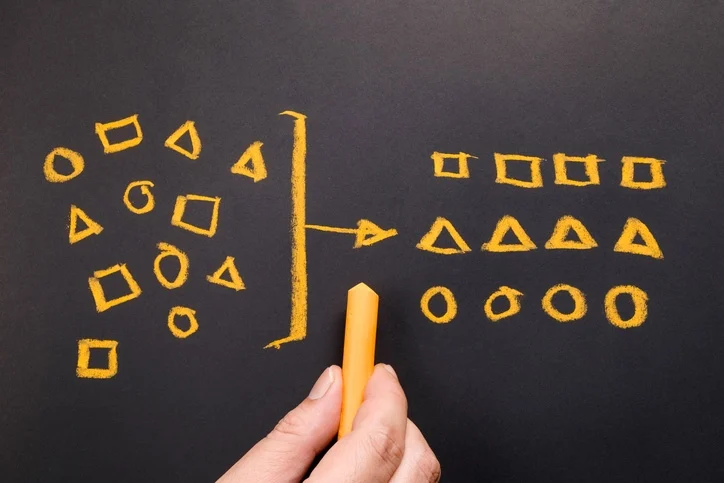
    Standardisation, Modularisation, and Parametrisation Explained

    Standardisation, modularisation, and parametrisation offer significant benefits in design automation for machinery manufacturers. We prepared this animation to provide a better understanding of how we implement standardisation, modularisation, and parametrisation in our clients’ products.


    The choice of the technique depends on the client’s needs, and one or more techniques can be used simultaneously. For example, in the ESP filter, a Scandinavian Digital-demonstration product, we use modularisation and standardisation, while for the Fermentation Tank, we demonstrate how to parameterise a complex model. This fermentation tank was also developed by our team and features more than 8 trillion possible configurations, making it a highly customisable product. 

    Here we highlight the benefits of each approach: 

    Standardisation 

    • Streamlined Design Process: Simplifies the design process by using predefined components and templates. 
    • Enhanced Collaboration: Facilitates collaboration among design teams through consistent design standards. 
    • Design Reusability: Promotes the reuse of proven designs, reducing the need for new design work. 

    Modularisation 

    • Flexibility: Allows the creation of varied products using the same modules. 
    • Faster Development: Speeds up new product development by reusing existing modules. 
    • Customisation: Enables easy customisation to meet specific customer needs. 

    Parametrisation 

    • Customisation and Personalisation: Creates tailored products by adjusting parameters. 
    • Efficient Design Changes: Quickly implements design changes and optimisations. 
    • Complex Configurations: Handles numerous product configurations, enhancing diversity. 

    We also have three previous articles explaining each of these approaches, which you can read here:  

    https://scandinaviandigital.com/streamlining-efficiency-how-parametrization-transforms-machinery-manufacturing/ 

    https://scandinaviandigital.com/efficiency-amplified-navigating-the-future-of-machinery-manufacturing-through-modularization/ 

    https://scandinaviandigital.com/efficiency-through-standardization/ 

    Read More

    Scandinavian Digital presents the Product Master Model chart

    The “Product Master Model Insights” chart is a comprehensive visual guide designed to illustrate the various components and benefits of implementing a product master model within the field of engineering and design automation. This chart serves as an educational tool for professionals in product development, manufacturing, and supply chain management, as well as for students and stakeholders interested in understanding the intricate aspects of product design and lifecycle management.


    Overall, this chart is intended to provide you with a clear understanding of how a product master model can streamline the design-to-production process, facilitate better communication among stakeholders, and enhance overall product quality and sustainability.

    Read More

    How Parametrization Transforms Machinery Manufacturing

    Parametrization in machinery manufacturing is a methodology that transforms the way machines are designed and configured. It involves incorporating adjustable parameters or variables within the machinery design, offering flexibility to adapt machinery to diverse specifications, production demands, or operational conditions. These parameters act as adjustable settings, allowing for easy modification without restructuring the entire system. This approach streamlines customization, enabling specific adjustments to be made efficiently, thereby amplifying adaptability across various manufacturing scenarios. 

    Comparing Parametrization, Modularization, and Standardization  

    While parametrization focuses on adjustable variables within the design, modularization involves building systems using standardized, interchangeable modules. Modularization enables the creation of complex structures from simpler, pre-built units, facilitating ease of assembly, repair, and customization. On the other hand, standardization revolves around uniformity in design and manufacturing processes, aiming for consistency and ease of production. 

    Each approach—parametrization, modularization, and standardization—offers distinct advantages. Parametrization stands out for its ability to fine-tune specific aspects of machinery without completely restructuring the entire system. Modularization excels in simplifying assembly and maintenance by utilizing interchangeable modules. Meanwhile, standardization ensures consistency and reliability in manufacturing processes.

    The good news I have for you is that we have an experienced team in these three highly connected processes that will completely change your team’s work. Your team’s initial processes of modularization and standardization can be improved by our team or even initiated, if necessary, but it’s parametrization where we excel. Addressing various needs, the Scandinavian Digital team implements parametrization to completely transform your deals and orders, resulting in more sales and a stronger product. Ultimately, product quality is one of the key benefits in Design Automation.


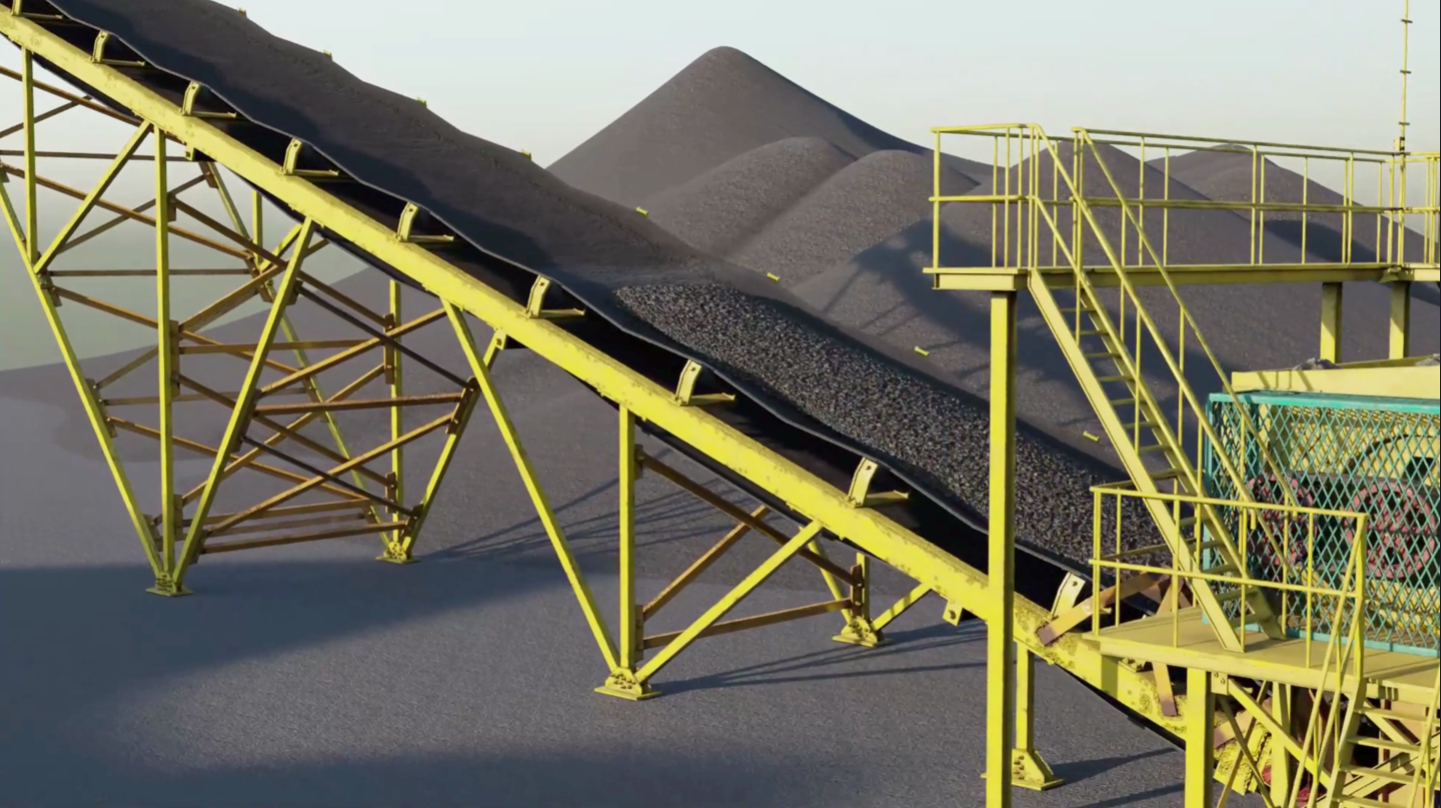
    Scenario: Creating a Parametrized Conveyor Belt System
     

    In the video below, you’ll witness a scenario where a manufacturing company specializing in conveyor belt systems implements parametrization using Design Automation to adapt to diverse client requirements without the need for entirely new designs. This practical example illustrates how parametrization revolutionizes the customization process in conveyor belt systems used across various industries.


    • Identification of Adjustable Parameters: The engineering team identifies crucial parameters that can be adjusted in the conveyor belt system. This could include variables such as belt speed, width, material composition, motor power, and sensor configurations. 
      • Designing a Parametrized System: Engineers design the conveyor system with these adjustable parameters in mind. They create a system that allows for easy modification of these key variables without requiring an entire system overhaul. 
        • Adaptability and Customization: When a new client order comes in with specific requirements, such as a conveyor belt for heavy-duty materials or delicate items, the team uses the parametrized design to swiftly adapt the system. For heavy-duty materials, they may adjust parameters like belt width, stiffening, and motor power for efficient handling. Conversely, for delicate items, parameters such as reduced belt speed, softer materials, and adjusted sensor sensitivity are modified without redesigning the entire system. 
          • Efficiency and Cost Savings: The parametrized design approach significantly reduces lead time and costs typically associated with creating customized systems for each client. It streamlines the manufacturing process, ensuring efficient responses to various client needs. 
            • Scalability and Future Adaptation: As the company’s clientele expands or industry demands change, the parametrized design acts as a flexible base for further modifications or scaling. New parameters can be introduced or adjusted to meet evolving requirements. 
              • Demonstrating Flexibility and Versatility: The video demonstration showcases how parametrization enables the manufacturing company to efficiently address different client needs across various industries. It highlights the system’s flexibility in adapting to diverse specifications without compromising quality or efficiency. 
                The belt and the options for customization


                The Game-Changing Impact of Parametrization for Machinery Manufacturers 

                Parametrization emerges as a game changer for machinery manufacturers dealing with complex and varied products. Its adaptability allows for swift adjustments in machinery to accommodate varying requirements or changes in production needs. This capability significantly reduces design iteration time and improves responsiveness to market demands.

                The flexibility of parametrization empowers manufacturers to tailor machinery to specific client requirements without extensive redesigning, thereby minimizing engineering lead time. Moreover, it optimizes resource utilization by enabling efficient reuse of existing designs with parameter adjustments, saving both time and costs associated with creating new systems from scratch. 

                Industries embracing parametrization, such as automotive, aerospace, and semiconductor manufacturing, are leveraging its advantages to drive innovation and rapid adaptation. In contrast, sectors yet to adopt this methodology may face limitations in responding promptly to market dynamics or incorporating cutting-edge technologies into their machinery. 

                Talking about innovation as a benefit is precisely what companies need to stay ahead of the competition. Once these implementations prioritize a more streamlined process, efficiency is ensured, with an emphasis on maintaining overall efficiency as the primary objective. Parametrization presents a forward-looking approach in machinery design offering a blend of adaptability, efficiency, and agility that paves the way for competitiveness and leadership in the market. 

                Read More

                Efficiency Amplified: Navigating the Future of Machinery Manufacturing through Modularization

                After discussing the crucial role of standardization in enhancing efficiency in machinery manufacturing, we now shift our focus to another essential strategy: modularization. This article explores the synergy between standardization and modularization, examining how these approaches collaboratively contribute to advancing operational excellence in the machinery manufacturing landscape. 

                The Power of Modularization 

                Modularization is the breakdown of a system into self-contained modules, offering a flexible and scalable approach to increase efficiency. Building on the foundation set by standardization, modularization introduces a new dimension to the pursuit of streamlined and adaptable processes. It significantly impacts the design and development phase, where standardized, interchangeable modules become building blocks, accelerating the process and fostering an agile environment.

                This method is especially beneficial in industries such as dairy and food manufacturing, where machinery systems can be quite complex and demanding to manage.  

                For manufacturers dealing with complex machinery systems, modularization simplifies the detailed components by breaking them down into manageable and standardized units. These modules provide an organized approach to constructing complex machinery, simplifying assembly in multifaceted production lines.  

                Standardized and interchangeable modules, acting as foundational building blocks, speed up the design process. Designers and engineers can quickly create new configurations using pre-existing modules, reducing design time and fostering agility.

                Adaptability and Customization and the synergy with Standardization 

                Embracing modularization in machinery design requires an open-minded approach. While based on standardized units, modularization is adaptable and dynamic, allowing for customization within a modular framework. This adaptability is crucial in industries dealing with bespoke products, such as customized dairy processing plants or specialized conveyor systems, products that our team has plenty of experience. 

                The synergy between standardized modules and an accelerated design process leads to faster product realization, crucial for companies dealing with extensive and complex machinery. This synergy enables quicker production cycles, meeting market demands promptly and facilitating easy scalability, especially for sectors as industrial equipment production, semiconductor manufacturing, and renewable energy equipment.
                 

                Modularization extends its efficiency to the production floor, optimizing manufacturing lines through independent production of modules. This approach enables parallel processes, minimizing bottlenecks and enhancing overall productivity. 

                Modularization, in synergy with standardization as mentioned previously, is a game-changer in machinery manufacturing, offering efficiency, adaptability, and innovation. At Scandinavian Digital, we combine various methodologies developed by our experts with some of the market strategies to find the best-fit solutions for our clients’ unique challenges. Recognizing the distinct nature of each product, we pride ourselves on our adaptability, seamlessly implementing modularization techniques. 

                This flexibility allows us to tailor our approach, ensuring that our solutions precisely match the diverse needs of our clients while optimizing efficiency and innovation in every project we undertake. Our motto, “We do not deliver projects we deliver value”, reflects our commitment to crafting bespoke solutions that align with our clients’ necessities and goals. For a DEMO of our methods or to learn more about modularization, please contact us. 

                Read More

                Efficiency through Standardization: Striking the Perfect Balance with Design Automation in Machinery Design

                In the world of machinery manufacturing, the pursuit of efficiency is a constant journey. As industries evolve and demands for innovation grow, companies seek ways to streamline their processes without compromising quality. This is where Design Automation, a key facet of Scandinavian Digital’s expertise, comes into play. In the complex world of machinery design, every component plays a crucial role. However, the diversity of products and the complexities involved in customization often lead to challenges in maintaining efficiency. The solution lies in finding a delicate balance between customization and standardization.
                 

                Standardization forms the backbone of efficiency in machinery design.

                 For almost 20 years, the Scandinavian Digital Team has specialized in Design Automation, working closely with machinery manufacturers. Our focus is on empowering manufacturers to use a range of tools that make the most of standardization in conjunction with modularization and parametrization. By establishing predefined components and configurations, we help reduce design time, minimize errors, and enhance overall product quality. Our expertise lies in using a set of tools that combine standard practices with flexible methods, simplifying processes to create innovative designs that automate and improve manufacturing for our clients. 


                Standardization reduces product cost in engineering by establishing and implementing a set of guidelines, specifications, or criteria that ensure uniformity, consistency, and compatibility across various aspects of the product.


                Design Automation is a Catalyst for Efficiency.

                It is an understatement to mention that. At the core of Scandinavian Digital’s approach is the integration of Design Automation tools. These tools allow for the creation of parametric designs, enabling quick customization based on specific requirements. By leveraging automation, manufacturers can seamlessly transition from standardized designs to tailored solutions, ensuring a perfect balance between efficiency and customization. 

                It is also possible to streamline processes with Configuration Management. One of the key pillars of Scandinavian Digital’s Design Automation strategy is robust configuration management. This involves creating a centralized repository of standardized components, rules, and specifications that we call Product Master Model. This repository becomes a dynamic resource that facilitates rapid design changes and updates. As a result, manufacturers can respond swiftly to market demands, adapt to new regulations, and implement design improvements without causing disruptions in the production pipeline and without having to rely on the human brain or a specific employee, which helps companies since staff turnover occurs over the years. 

                The importance of optimizing resources. 

                A lot has been said about efficiency, although in machinery design, it is not solely about speeding up the process but also optimizing resources. Scandinavian Digital understands the importance of resource management in manufacturing. Through Design Automation, we empower manufacturers to utilize their resources wisely, ensuring that every component aligns with standardized specifications. This is made possible through correct sizing and document management, such as updated and well-specified Bill of Materials and 2D drawings. This comprehensive approach leads to a reduction in waste, minimized production costs, and an overall improvement in resource utilization. 

                We are always looking ahead, and the Future of Design Automation in Machinery Manufacturing is a key piece. As a queen on the chess board. Scandinavian Digital’s commitment to pushing the boundaries of innovation in Design Automation positions us as a driving force in shaping the future of efficient machinery design. In conclusion, achieving efficiency through standardization is not just a goal; it’s a necessity in today’s dynamic manufacturing landscape. Standardization in machinery manufacturing offers a range of significant benefits that contribute to efficiency, quality, and overall operational success that is the main goal, we can mention interchangeability, cost reduction, faster customization, and an overall higher product quality. 

                As highlighted in the title of the article, Scandinavian Digital, with its expertise in Design Automation, not only aids companies in achieving the ideal equilibrium between customization and standardization but also employs its proficiency to guide them toward a future where success in machinery design is intrinsically tied to efficiency. 


                Read More

                User-friendly tools for non-technical people

                Design Automation tools have revolutionized the way complex machinery and systems are configured and customized for various applications. One of the most significant advancements in this domain is the user-friendliness of these tools, which has made them accessible to non-technical people. This user-friendliness is a game-changer, as it empowers individuals without extensive technical knowledge, we could say non engineering people, to configure and adapt intricate machinery to meet their specific needs and advance sales processes for many machineries manufacturing. 
                 
                It’s important to emphasize that, in addition to the individual benefits for professionals, companies experience several advantages when implementing Design Automation, we have listed here many times. With the example of our 6 Value Areas.

                 
                However other benefits that’s this user-friendliness brings is lower training expenses as direct result of users requiring less technical expertise to operate the tools, ultimately leading to reduced labour costs and increased efficiency in projects. This, in turn, translates into significant cost savings, a big monster for small, medium and big companies that work with product development and customization in order execution phase.


                One of the notable benefits that come to the forefront when implementing DA is the competitive advantage it offers. It promotes empowerment and innovation within the team, allowing non-technical personnel to take ownership of their projects. The tools – for example Parametric CAD Software’s, Configurators – have predefined parameters that prevent mistakes, resulting in a significant reduction in errors. User-friendly interfaces play a pivotal role in preventing configuration errors, enhancing product quality. Moreover, it fosters improved team connectivity and communication since the technical team and the non-technical team are aligned during the whole process.

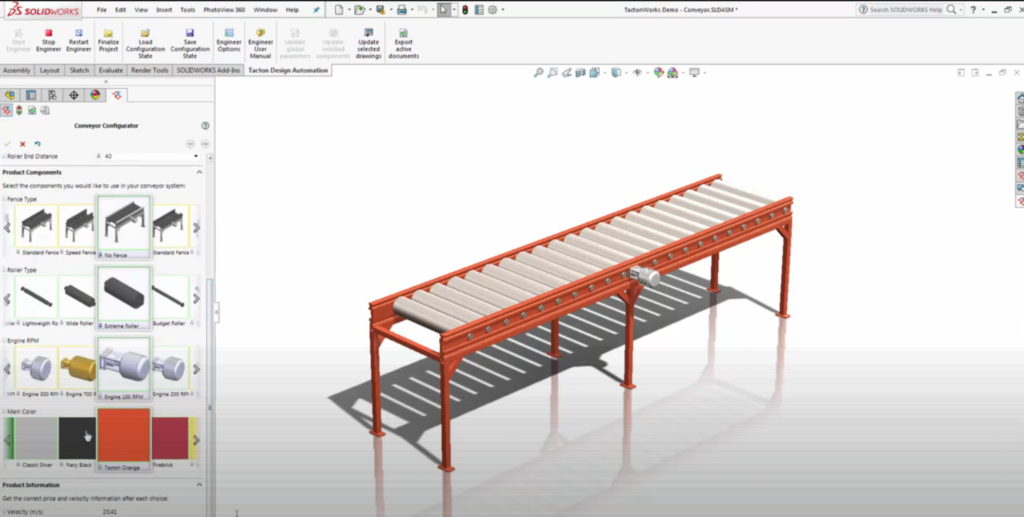
                To make it even more clear, here is an example of a configuration that a non-technical person could make using a Design Automation tool. Let’s consider a company that manufactures customized conveyor systems for various industries.  

                Normally, configuring a conveyor system involves specifying its length, width, speed, and the type of materials it will handle. A non-technical person could use a Design Automation tool to customize a conveyor system for a specific application. As a first step, the non-technical employee needs to have the master model where all information about that product is stored to start. Depending on the customer needs the type  can change, being very important to have a master model for each one, these can be belt conveyors, roller conveyors, or chain conveyors. Each type has a user-friendly interface with a 3D model or even a realistic image and descriptions.  

                The second step would be the desired size and dimensions. Using simple input fields or interactive drag-and-drop features, the user can specify the wanted length, width, and height of the conveyor system. The tool provides real-time visual feedback on how these changes affect the design. Moving forward with the configuration, the third step would be the Material Handling. The user can indicate the type of materials the conveyor will handle. The automation tool may suggest appropriate material handling features like special belts or side guides based on the selected material.  

                The next step is Speed and Capacity. During the configuration, the non-technical person can specify the desired speed of the conveyor and the weight capacity it needs. The tool may provide recommendations or constraints based on the chosen conveyor type. Now comes a very important part of the configuration, the visualization. As the user makes selections, the tool provides a visual representation of the configured conveyor system within minutes. This helps non-technical users see how their choices impact the final design. And creates automatically 3D models and 2D drawings.  

                This kind of tools can also provide Pricing and Quotation. Once the configuration is completed, the tool can show an estimated price for the customized conveyor system and generate a quotation helping with faster communication with leads. The user can review, make adjustments, and proceed with the order in a fast pace, reducing the company lead time and possibly accelerating revenue. 

                In this video, you’ll witness the step-by-step setup of an elevator system, much like how we previously detailed the configuration of a conveyor system. Towards the video’s conclusion, you’ll also gain insights into the seamless integration of Design Automation tools with a Configure, Price, and Quote system. This integration streamlines the sales process, making it a must-use for non-technical people.


                Read More

                Unlocking Efficiency and Advantages: Design Automation’s Impact on Aggregate Crushers

                Design automation is a critical process that cement industries can integrate into their operations. This article will detail the configuration of an aggregate crusher, which serves as the initial step in cement production. Design automation (DA) brings forth multiple benefits for the aggregate crusher configuration. Within the cement industry, proper sizing remains the foremost factor, and once achieved, it leads to various other advantages. Efficiency is enhanced as DA tools automate repetitive tasks like component selection, parameter adjustment, and design optimization. This not only saves time but also reduces errors, enabling engineers to configure crushers more swiftly and efficiently. 

                Another advantage lies in customization. Crushers often need to be tailored to meet specific requirements or adapt to various applications. Design automation tools streamline customization by providing predefined options and configurations based on operational requirements, such as targeted production output and environmental factors like temperature fluctuations in the installation region, humidity, pressure, and even the risk of earthquakes.

                For instance, the process of breaking down limestone into smaller pieces typically involves a combination of compression and impact forces. These crushed limestones are subsequently mixed with other materials to create cement. Cement production may involve different types of stone that require crushing, as well as other materials like gypsum and coal, which transform into dust resembling small rocks.

                Standardized quality is a fundamental requirement, and Design Automation promotes consistency and standardization in crusher configurations. This minimizes output variability, enhances quality control, improves reliability, and boosts machinery performance. While this article focuses on the importance of DA for a single machinery piece in the process, it’s essential to note that Design Automation can be applied to all machinery post-crusher, optimizing the entire process. The objective is to highlight the benefits within each model and process step.

                Collaboration and communication are integral aspects of Design Automation. Automation tools facilitate collaboration among various stakeholders involved in crusher configuration. Engineers, designers, and team members collaborate using a shared platform, exchanging information, making real-time updates, and accessing a centralized design data repository. This drives effective decision-making, leading to streamlined and higher-quality crusher configurations.

                As previously mentioned, the aggregate crusher marks the process’s inception but holds significant value for subsequent steps like raw mix preparation. Stone crushers ensure uniform and thorough crushing of raw materials, resulting in a consistent and homogeneous raw mix. Secondary crushing might be necessary in cement manufacturing. After the initial crushing, secondary crushers further refine materials to achieve the desired particle size distribution or specific characteristics needed for cement production. 

                 To provide a visual demonstration, a video showcases a crusher configuration within the context of the cement industry. The demo features an impact crusher, one of several options employed in the cement industry, alongside jaw crushers and cone crushers.

                For those interested in the cement industry, another DEMO illustrates the configuration of an industrial bag filter. This equipment is crucial in the cement processing industry as an air pollution control device. It removes particulate matter like dust and fine particles from air exhaust generated during cement manufacturing processes, which encompass the handling, grinding, and processing of raw materials such as limestone, clay, and other minerals to produce cement clinker. WATCH HERE!

                Read More

                Overlooked value potential with Supplier Integration

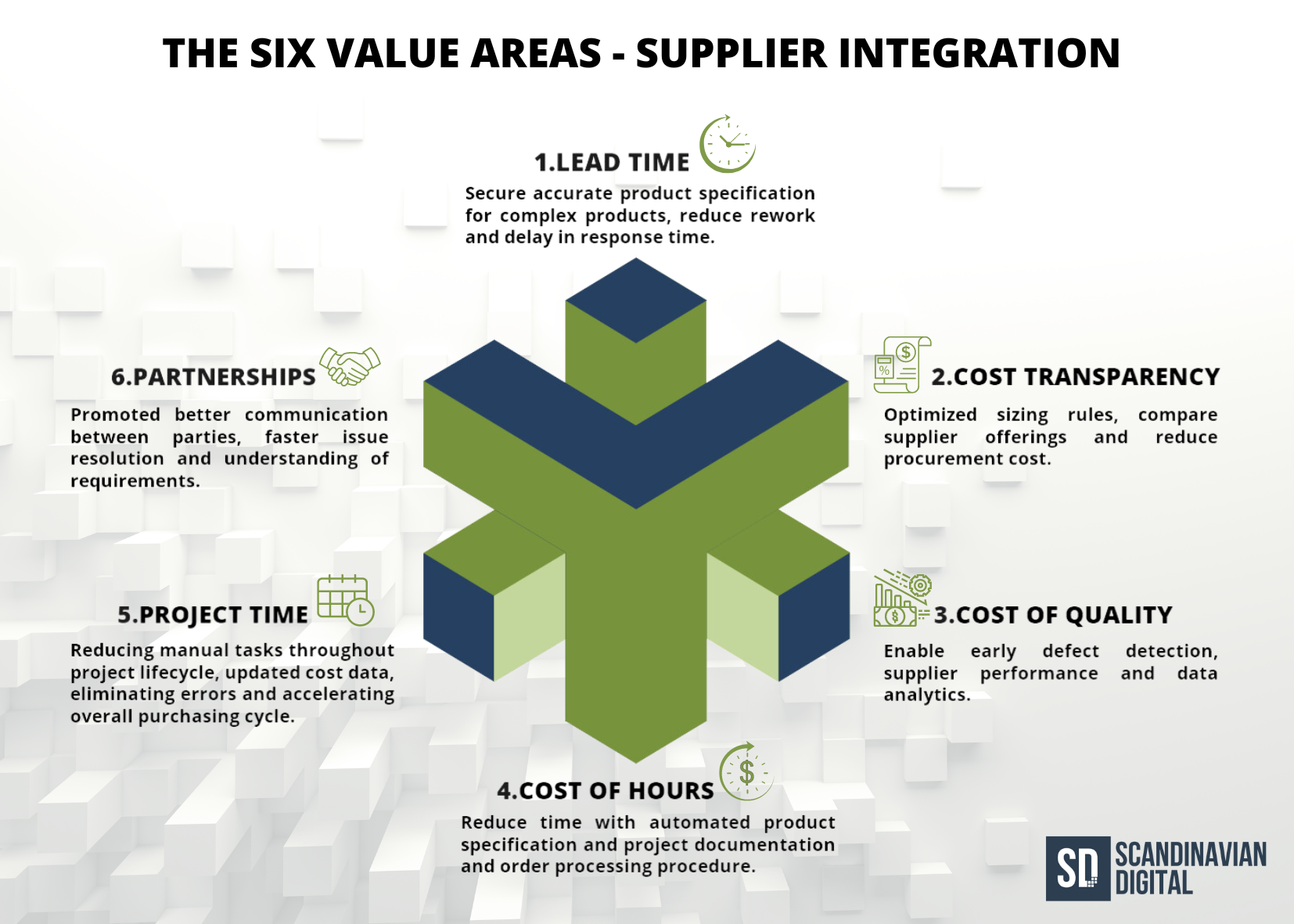
                Supplier Integrations play a crucial role in achieving operational excellence, driving innovation, reducing costs, and consequently improving customer satisfaction with better results. By building strong relationships and integrating suppliers into business processes, companies can create a competitive advantage in today’s dynamic and complex business environment. Scandinavian Digital experienced in Supplier Integration implementation presents a “6 Value Areas” diagram, where supplier integration business potentials are highlighted.

                Scandinavian Digital Supplier Integration 6 Value Areas

                To comment on the values, we invited our CFO Christian Andersen, key player to these 6 areas being established. Starting with Lead Time, he explains as: “Supplier integration will significantly reduce lead time by streamlining product specification and procurement processes, enabling seamless configuration and ordering, and improving communication with the supplier, resulting in faster project turnaround and enhanced operational efficiency.”

                Continuing talking about the areas, Cost of Transparency stands out as a very important one since it becomes easier to compare prices based on your needs. In addition, it becomes much easier to discover and compare various solutions. If they from a technical point of view, all are according to the requirements, then the optimal choice have the lowest cost since additional overperformance, or oversizing will only add extra cost to the project the end customer initially did not ask for. Still talking about cost but with the focus on quality, Christian adds: “Uniform information leads to fewer errors in a configurator environment, resulting in a better cost of quality.” The last cost area that we talk about in our values is the Cost of Hours, since automating repetitive tasks facilities better utilization of the team, it is possible to focus on more value adding tasks while avoiding unformal procedures that may lead to the loss of critical information. As our CFO says: “Secure and structured flow of information bring back faster results”.

                The fifth value area, Project Time, is a consequence of the previous areas. With shorter Lead Time, better transparency of cost, lower errors on the cost of product, reduced use of Hours and Partnerships, the Project managers will experience a solid foundation for delivering large and complex project on time, as specified by the customer and within the agreed time. The final area to highlight is partnerships as Christian states: Supplier integration fosters stronger partnerships by improving collaboration, enhancing communication, and facilitating a seamless exchange of information and resources, leading to mutual growth, increased business opportunities, and improved overall efficiency.

                Christian Andersen, Scandinavian Digital’s Senior Partner and Chief Financial Officer

                The concept from Scandinavian Digital is to be a facilitator between manufactures, product– and project companies, and suppliers, offering a platform for both vendor and buyer. The use of web API’s helps to provide a secure and centralized space for sharing information, and collaborating on various activities. It’s possible to facilitate communication, document sharing, and real-time updates on order status, delivery schedules, and product specifications.

                In this environment, suppliers can switch roles with manufacturers. After all, often the supplier requires technical information to create or assemble their product before bringing it to market. We can say that this type of platform is a two-way street that can be highly beneficial for long-lasting partnerships with a good cost-benefit ratio, low lead time, high quality, and minimal errors in the process due to automation.

                Our CFO, Christian Andersen, responsible for leading many of the supplier integrations projects state what the SD team brings to the table, “In a certain way we broader the market for the companies as well as for the suppliers. We display their products in an easier way to the right target group. And consequently, the more complex the product is, the more work can be automated and less errors made in the entire process.”

                Another important part of Supplier Integration is the Advanced Analytics and Reporting, since data provide valuable insights into supplier performance, supply chain risks, and cost optimization opportunities. “Supplier integration is one of the most overlooked areas to reduce lead time and costs of goods in projects companies.” this is a statement of our CFO, reaffirming that Supplier Integration is a must to enhance end-to-end processes in projects, especially considering that it is very often overlooked or not solved in large companies since is require top-management buy-in for the end-to-end process optimization.

                With Supplier Integration projects for products like gears, elevators, fans, filters, and hydraulics listed in our curriculum, it becomes evident to our team that Supplier Integration has the potential becoming a game changer within and beyond an organization. For that reason, it’s important with top-management buy-in in order to avoid sub-optimization in individual departments. For that reason, Scandinavian Digital have developed a well-proven framework to safeguard, the integration project offers a multitude of advantages, primarily by effectively connecting individuals with their specific needs in a trustworthy environment for both sides.

                Read More

                Documentation Generation and Management using Design Automation

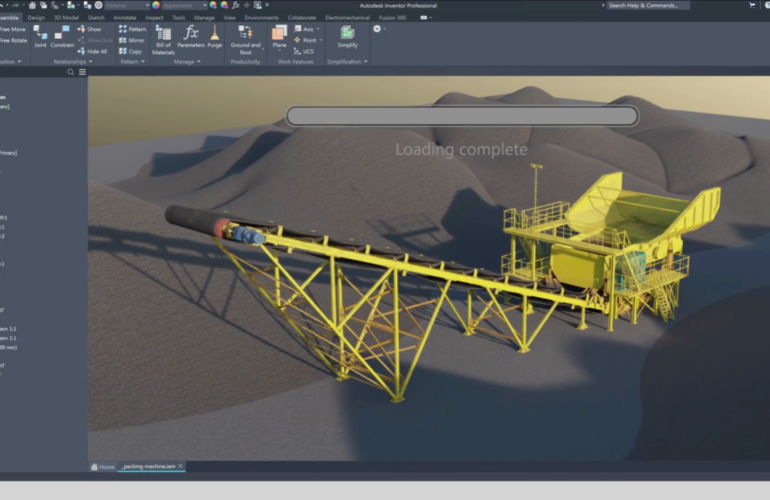
                Documentation generation and management are critical aspects of machinery manufacturing companies, ensuring accurate and up-to-date information about product designs and associated data. In machinery manufacturing, Design Automation and Computer-Aided Design (CAD) tools like SOLIDWORKS, Autodesk Inventor, PTC Creo, along with software platforms like Tacton, play a vital role in facilitating efficient documentation generation and management.

                Design Automation refers to the use of CAD tools and configurators to automate design tasks and processes, offering engineers and designers the ability to generate designs, make modifications, and create documentation quickly and accurately. Within the Scandinavian Digital benefits showcase, Digitalisation takes a prominent position among the six core value areas. It holds particular significance for manufacturing companies, offering valuable advantages.
                 

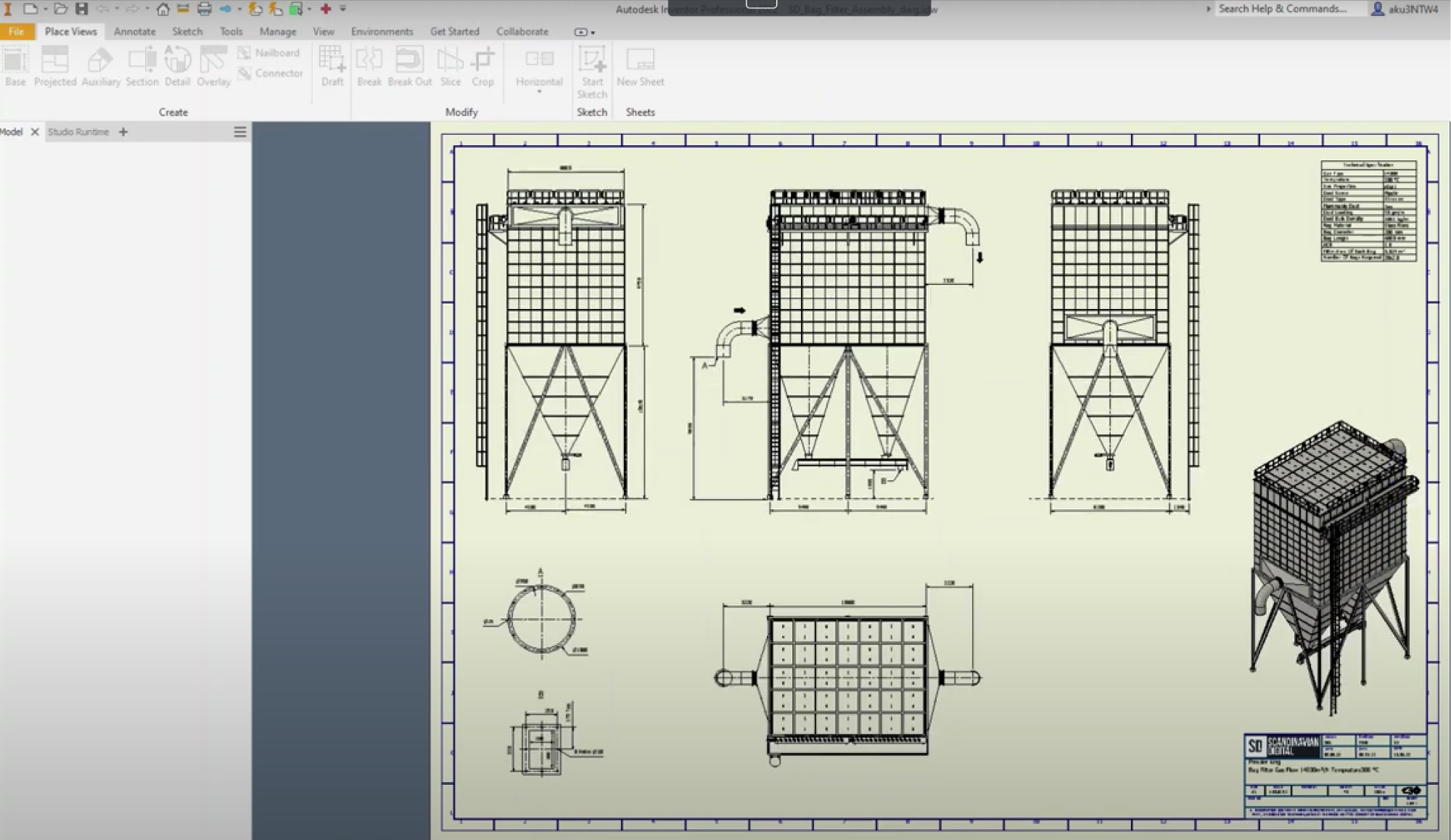
                2D drawing of the Bag Filter – Scandinavian Digital Product
                When you save information in a digital document or in the master model of your product, it goes beyond mere reliance on human memory. This significantly aids in ensuring repeatability in the future, as the data remains preserved even if the person responsible is no longer available. Losing that individual does not result in the loss of valuable data, thus providing added security and continuity.

                Our partner and head of the Indian office, Vivek Nagarajan, expert in Design Automation with more than 15 years of experience, explains the relevance of this part of the DA process: “Design Automation gives our customers the power to document the present, preserving knowledge for the future. The documentation becomes a valuable asset for not just the current project but also for upcoming ones. This accumulation of knowledge, facilitated by automation, establishes a foundation for continuous learning and empowers organizations to build on past successes.”

                CAD tools specifically tailored for machinery manufacturing provide comprehensive features and functionalities to create, modify, and visualize 3D models and 2D drawings, assemblies, and manufacturing drawings. These tools empower design automation by enabling users to capture and reuse design intent, automate repetitive tasks, and generate accurate documentation directly from the CAD model. 

                In the context of machinery manufacturing, CAD tools offer several features that enhance efficiency and precision in documentation generation, Automated Drawing Creation is one of them, being a highlight of our work with clients. CAD tools enable the automatic generation of 2D drawings from 3D models, providing machinery manufacturers the ability to define drawing templates with standardized title blocks, borders, and other annotations. When modifications are made to the 3D model, associated drawings can be updated automatically, ensuring that all documentation remains synchronized and accurate.

                Another important part of the documentation generation is the Bill of Materials (BOM). Machinery manufacturing often involves complex assemblies and subassemblies. CAD tools facilitate the creation of BOMs, listing all the components and parts required for manufacturing a machine. BOMs can be automatically generated from the CAD assembly, including part numbers, descriptions, quantities, and other pertinent information. This simplifies the process of creating and managing accurate BOMs, reducing errors and ensuring consistency across the documentation. The generation of BOMs are also relevant to other areas, besides engineering, inside a machinery manufacturing company, for example, the Supplier Integration team.

                The Bill of Material of the Industrial Bag Filter

                When the topic is: Software Integration. We can tell that some software integrates to common CAD tools and have the potential to benefit machinery manufacturers. Platforms like Tacton, which provide additional capabilities for automating configuration, quoting, and documentation generation processes. These platforms seamlessly integrate with CAD tools like SOLIDWORKS, Autodesk Inventor, PTC Creo and leverage product configurators to generate customized designs and associated documentation based on customer requirements. Such integration streamlines the management of complex product configurations and ensures the generation of accurate and detailed documentation.

                Design automation simplifies documentation generation and management, allowing engineers to focus on innovation. Automated tools seamlessly create documentation as part of the design process, enhancing knowledge sharing and project execution.
                Giving the word again to our partner, Vivek Nagarajan to conclude the benefits of the topic, “With design automation, the once tedious task of managing documentation becomes a seamless and effortless process. Automated documentation is not just a convenience but a necessity in today’s fast-paced and information-driven world. As design complexities increase, and project timelines shorten, automation becomes indispensable for managing the vast amounts of data and knowledge generated throughout the design lifecycle.”, stated.

                And this is a game changer for machinery manufacturing companies, leveraging design automation, CAD tools like SOLIDWORKS, Autodesk Inventor, PTC Creo, and software platforms like Tacton are crucial for efficient documentation generation and management. These tools provide features such as MBD, automated drawing creation, BOM generation, revision control, and integration with software platforms, thereby streamlining the process, enhancing productivity, reducing errors, and delivering high-quality documentation to support the machinery development process.

                You can watch the Bag Filter DEMO signed by the Scandinavian Team with the configuration of the product and the documentation automatically generated below:


                Read More